It has come to my attention as of late that people do not fully understand the difference in the punks. Some people seem to think that Steampunk is pretty much everything when you see it.
Let us review the fundamentals. Steampunk is set in an alternate future where steam was the primary technology and they continued on that path till now. That’s basically it. However there are MANY alternate futures with alternate technology’s, and lumping all of them into steampunk is just cheapening them. So let me just show you an example of each.
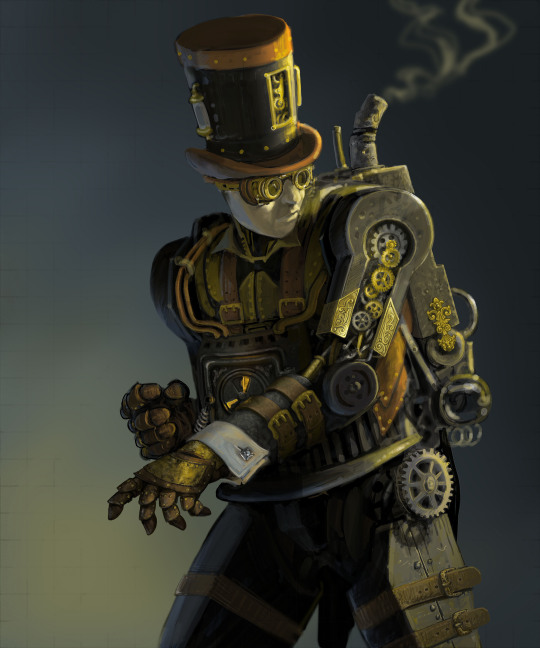
CLOCK/STEAMPUNK: This era is often Victorian in style for some reason and the steam powered robots often use lots of smoke stacks, gears, clockwork, belts and goggles.
TESLAPUNK: Unlike steampunk, this world functions as if Nikola Tesla had revolutionized the world with his electricity. Lots of lightning rods, Tesla rods and power cables. Often this is confused as steampunk because they often have the a similar look.
DIESELPUNK: This universe takes place in a world where diesel engines and machines using oil are everywhere. This is criminally underused. They usually use a more art deco and WW1/2 style.
ATOMIC/RAYPUNK: This one uses atomic technology. Lasers, blasters, radiation, green glows, aliens and giant robots. Also rarely used but I dare you to watch “The Iron Giant” and tell me you don’t love it.
CYBERPUNK: Possibly more well known than steampunk. A future, in which technology is so advanced people are more technologically advanced than some of the robots. Chainsaw arms, robotic eyes, hooking your brain up to the internet and evil corporations.
BIOPUNK: Imagine a future where technology has advanced so much that we construct living organisms as easily as building a robots. Living machines, weapons, organic clothing and new and improved limbs.
JUNKPUNK: Almost as unknown as candlepunk but still one to remember. This world all technology is composed of random parts you might find in a junkyard. Kind of like the ‘Coolest’ cooler.
SOLARPUNK: This one has been getting some recent attention. However in a world where technology is powered by the sun I have yet to find one robot picture so sorry about this one.
PUNKPUNK: You have gone off the far side of the spectrum. Turn back.
Hopefully now you can tell the different alternate futures apart and can better survive in the world with this Essential information.
(Note this is not my artwork just a quick google search, but I am working on a series that will clarify these examples better with my own work.)
Yo, just saying, but Cyberpunk ISN’T just an aesthetic.
Cyberpunk is a genre about contrast between high technologies and low life, and as such they focus on sadder/violent parts of people’s lives, like crime, law enforcement (treated realistically and not like in cop dramas), cybercrime, drug dealing, terrorism or warfare.
Common themes include any variation on a concept of identity (from identity theft, through search for identity, to identity politics), loneliness in digital age, anti-capitalism focusing on unchecked power of corporations, anti-fascism focusing on technological surveillance state, ethics of artificial intelligence and other technologies.
Best known examples are probably Robocop, Ghost in the Shell, Matrix (especially the first movie, sequels are more like post-apo war stories), Neuromancer, Snow Crash, Deus Ex, Shadowrun, System Shock.
Steampunk was an offshoot of cyberpunk, but since stopped being a genre and became only an aesthetic.
Biopunk is offshoot of cyberpunk, and usually contains similar themes (just with genetic engineering). Other offshoots include nanopunk (with nanotechnology) and, which has recently been getting more attention, nowpunk – stories that use concepts and themes of cyberpunk, but are set in contemporary times – we’re talking stuff like Mr Robot tv show, or Watch_Dogs video games.
Honestly, a lot of the punk settings and ideas are in some way political, or at least VERY good at exploring issues relevant to the time period they pull inspiration from.
Steampunk for imperialism, biopunk for ethical issues of biotechnology, atompunk for the red scare and cold war, etc. etc.
Not saying every story with these looks NEEDS to deal with those specific issues, but each punk type opens itself up to discussing those types of issues much more easily.
Also, each punk doesn’t need to exist separate from each other. I have a setting that is bio, solar, and junkpunk all at once.
These genres and aesthetics are tools, and the rules about ‘em aren’t hard and fast to say the least.
The “punk” part of all of these is a political analysis and a rebellion.
Steampunk without addressing the imperialism and class privilege of the Victorian era is “gaslamp fantasy” or “alternative history sci-fi”, depending on how sci-magical it goes.
Cyberpunk without the dystopia of a world ruled by megacorporations, and the small rebellions people engage in just to survive, is just gritty sci-fi.
Dieselpunk that doesn’t analyze how the imperialism of the late 19th century evolved into the rise of fascism in the early 20th is just more alternative history sci-fi.
Teslapunk have some similar imperialism themes to steampunk plus some of the anti-corporate vibe of cyberpunk. It’s an analysis of thing like “what would the world be like if an autistic dreamer like Tesla hadn’t been ground into the dirt by the corporate greed of Edison and others?” or “what if Edison and the other corporatists had stolen EVEN MORE of Tesla’s work?”
Solarpunk seeks to build clean energy, green spaces, and sustainable industries in response to the real threat of climate change.
The “punk” part is important. It gives us tools to dismantle injustice in the real world by analyzing or overcoming the injustice in a fictional one.


 rip tumblr