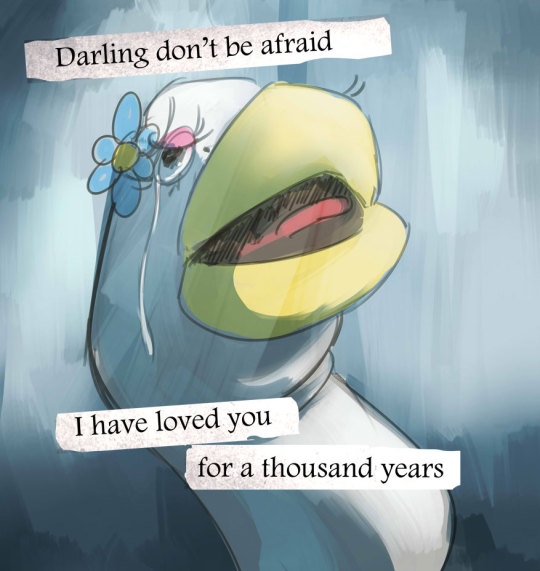
i just realized something: think about padme amidala’s public image. nobody knew she was married. nobody knew who anakin skywalker was at all–he was just some random jedi trainee, and by the time anybody would have started paying attention to him in the public eye, they would have known him as darth vader. to the public, anakin became a faceless villain who always was who he was, no fall from grace needed.
so, padme. i’m sure she had supporters across the republic. i’m sure her time as queen of naboo was EXTREMELY well-documented, and honestly, based on her rotation of outfits, she was probably a full-on celebrity. she was young and brilliant and a passionate defender of her people, and even though the empire seized power in the end, i wouldn’t be surprised if the rebellion decades later directly descended from the ideals of her followers.
but think about the circumstances of her death from the outside. people probably knew she was pregnant by some unknown father, of course, but this is a universe with robot doctors–saying “she died in childbirth” would probably be like saying “she died of the common cold” today. not something that happens, especially for a celebrity politician with unlimited resources. and there must have been a child, but what happened to it? did it die too? as a media narrative, it’s flimsy at best, ESPECIALLY considering the timing of her death.
padme amidala, the woman who ruled a planet at 14 and sat stony-faced while every other senator cheered on palpatine’s rise to power, died under mysterious circumstances just as the government she’d defended crumbled. from the outside, it seems pretty obvious that she was assassinated.
if this was a universe that at all made sense, padme amidala would have been a household name among republic loyalists. her tragically short life, her noble self-sacrifice for the ideals she believed in, would have been LEGENDARY. when the rebellion rose, she would have been the name on everybody’s mind–do it in her honor, people would have said. finish the fight she started.
i know we can’t go back in time and change the original trilogy, but the sequel movies? come on. don’t tell me darth vader is the only looming icon in this franchise.
To make it extra tragic – in the EU it mentions that the coroner used some kind of hologram technology to make it look like she was still pregnant at the time of her death, to protect the twins from the emperor and Anakin by telling everyone that the children had never been born. Padme Amidala’s death would have been the tragedy of the century, the face of the lost democracy.
Okay but what if that celebrity factor got used? By, like, everybody.
To the Naboo people, she’s their beloved Queen. To much of the galaxy, she’s a loved and admired public figure and stateswoman. To the Republic loyalists, she’s their martyred supporter, the vanquished—murdered, they think—face of Democracy. To the Empire, she’s a useful idol, the Emperor’s colleague, murdered, they say, by Separatist forces or by Jedi, tragically dead and conveniently silent, beautiful and glamorous and perfect for starting a cult of personality on her behalf.
And here and there, among the various cultures, there are religious concepts like sainthood, ancestor worship, legends of dead protectors coming to life again to fight when they’re needed. And conspiracy theories, and wishful thinking turned speculation, and the Star Wars equivalent of tabloid newspapers.
The result? Padmé is the most popular and famous woman in the galaxy, a combination of Princess Diana, Mother Teresa, Che Guevara, Joan of Arc, Elvis Presley, Arthur Pendragon, Chuck Norris, and the Virgin Mary.
One of the most important Imperial holidays is Amidala Day, devoted to celebrating service to the Empire, the official story of the Empire’s birth, the Emperor’s home world, and the heroic Queen and Senator whom Palpatine claims as his staunch supporter. People paint their faces and make elaborate hairstyles or headdresses and put on their fanciest clothes; there are plays, and parties, and traditional Naboo dances and foods.
Vader hates it. This is about 60% of why the Emperor has made such a production of it.
Among Republic loyalists, a different story is told: a Queen Amidala who loved peace and democracy, who opposed war and worked tirelessly for ceasefires and peace treaties, who stood silently or wept as all around her cheered the newborn Empire; a Queen Amidala who was murdered by the Empire so he could create the fiction of her support.
Vader hates this too. It feels uncomfortably true, and threatens to undermine his resolve that she would have been at his side had she lived.
Rebels paint images of her on their fighters, hang holos of her on their walls, wear icons of her as good-luck talismans. There are exhortations, penned semi-anonymously by people who knew her, that she would have wanted people to join and support the Rebellion. The minimalist image of eyes, cheek dots, and paint-split lips are graffiti’d onto public monuments accompanied by words from her speeches. “Amidala Needs You” is a common phrase on Rebel recruitment posters.
Vader hates this most of all.
Statues and icons of her are made in a hundred different artistic styles and adorn the altars of a thousand worlds’ faiths. Mythologies are written about her: she stopped a Separatist advance with words once, appeared in a dream to a slave telling her where her transmitter was hidden, shot five destroyer droids with pinpoint accuracy before they got their shields up, stormed her own palace to take it back from the Trade Federation, cheated death at the hands of the Empire’s assassin, escaped with the help of the last of the Jedi, is still out there somewhere, mourning for the Republic on some uninhabited planet somewhere, training in secret lost Jedi arts to kill the Emperor, working as a Rebel agent or a disguised vigilante.
Vader dislikes this. But he also seeks them out and reads them, when he’s in a certain mood.
The tabloids regularly claim that she’s been seen working as a roast-traladon restaurant in some backwater suburb of Corellia, or navigating a spice freighter to and from Kessel, or singing at a nightclub on Nar Shadda.
Vader dislikes this too. He has to talk himself out of keeping an agent or three just to visit the places in question and make sure.
He isn’t often in a position to see teenage girls with Padmé’s face emblazoned across their tunics, or walls with familiar face paint next to “So this is how liberty dies: to thunderous applause” printed next to it. When he hunts down Rebels with her image on a chain around their necks for luck, he can tear them apart with the Force: a quick death, which is, ironically, the luckiest outcome available to them. Tabloids and legends can be read and dismissed, and he’s never had the opportunity to happen upon the fanfiction.
But when the Emperor commands, Vader stands at his side through parades and parties and celebratory addresses to the Senate, with Padme’s image on banners and holos, with Padmé’s image on stage saying words Padmé never said, with all the women and half the men wearing Naboo royal face paint, and accepts the pain of memory almost like a form of self-harm.
And when the newly-elected Junior Senator from Alderaan with a quiet grace that reminds him of her and a fire in her eyes that reminds him of himself asks him, at some interminable party, if he knew what she was like, he troubles himself to answer honestly.
Department Store, Mobile, Alabama. Gordon Parks, 1956.
This photograph was part of Gordon Parks’s 1956 photo essay for Life Magazine documenting the life of the Thornton family under segregation in Alabama. The essay served as crucial documentation of the Jim Crow South and acted as a national platform for challenging racial inequality. However, his images look quite different from many other iconic civil rights photographs. In an era when the primary medium for documentary photography was black-and-white film, Parks instead chose to present these quiet images of domestic life in full colour.
His choice of subject matter further sets this series apart from others of the period. Rather than focusing on the demonstrations, boycotts, and brutality that characterised the battle for racial justice, Parks emphasised the prosaic details of one family’s life. In particular, his ability to elicit empathy through and emphasis on intimacy and shared human experience made them especially poignant.
For those of you who don’t know (aka me until 30 minutes ago) there’s a couple websites that will help you out with your ballot for this year’s upcoming mid term elections but I wanna talk about one specifically. It helps out by telling you who is running for what and all the verified information that they have for that candidate. It also let’s you save them to your OWN makeshift ballot that you can use as a reference when voting time comes!! The website itself is run by people who identify as Liberals and they really try their best to educate you on all the matters. It’s called ballotready.org. Here’s a link!