scarjo dropped out of rub & tug but please remember that that doesn’t make her a good person. she still auditioned for that role, she still took it, and the only reason she dropped it is because she couldn’t handle facing the consequences of her transphobic actions.
Concerning yourself with whether a celebrity you don’t know is or is not a “good person” in their hearts is a distraction from targeting discriminatory behavior that actually matters. What matters is Hollywood’s actual actions, and public outcry spearheaded by trans people resulted in a positive action here – if it was just “caving to public pressure”… good! That’s what the point of the public pressure was! Reward good behavior, punish bad behavior, and don’t waste time worrying about how celebrities really feel in their hearts.
It’s possible she’s actually learned. It’s also possible she hasn’t, but wasn’t allowed to get away with it. I don’t care which as long as she doesn’t do it again.
Exactly! The whole POINT of public pressure is to generate change – to then judge that change on the person’s purity of heart is pointless.
If the lesson here is “you fucked something up, you apologize, you don’t do it again, and your career isn’t (badly) damaged,” that’s good.
If the lesson here is “you fucked up, you apologized, you don’t do it again, but no one cares and people hate you personally forever and ever,” then there’s no point in dropping out of projects like this. Once the damage is done, they might as well continue on because people will hold it against you anyway.
You should WANT people to change. That’s the goal.
(And let’s not forget the shitty white man, Rupert Sanders, who cast her as a transman, and ALSO as an asian woman.)
I was playing pokemon go the other day with friends and I managed to hop into a kyogre raid last minute and it started to rain really, really heavily. we joke and say “kyogre’s drizzle made it rain!” and laugh about it and proceed to take it down pretty easily. so i’m trying to catch this bigass blue whale with a waterlogged phone screen, huddled under a tiny umbrella with the two friends that were watching me do this, and I manage to actually curveball and catch kyogre. the ball clicked with its little star animation and all at once – the rain just abruptly stopped
the heavy as hell, soaking us to the very bone drenching the socks in our shoes rain lasted the duration of the raid until the exact second that ball clicked
it was the most surreal moment of my life. i think i may have just completed pokemon sapphire irl.
some stuff isn’t just a trope, you know? in the movies, we’re introduced to women who are “experts” who have trained for years, who live and breathe and are willing to die for whatever the male main character has never even experienced before. and then he takes the reigns and upstages her, instantly, with a little bit of friendly bewilderment because, come on, it’s not antifeminist, he’s just good, he’s standing there having shown he’s actually more powerful than she’ll ever be – and we buy it. and then we go home and when we live and breathe something we still ask ourselves. “am i actually good at this? or is some fool going to walk into this presentation eighteen minutes in and offer a sarcastic and biting correction?” we wait for the man to show up and prove that, despite awards and training and an excellent job position, we’re actually just secretly incompetent.
the trope isn’t just setting up for us “this man is good at what he does” – the fact that the trope demands our male hero upstage the woman says: even an incompetent man will always be better than the best woman. he could have upstaged the sage boss or whatever other male in power exists in the movie. but he doesn’t. he upstages the woman to earn his pack order because she is, intrinsically, the weakest link. the real fight will be man against man. it always is.
and i wish, i wish it stopped outside of the theater. but the number of men who try (gently) to assure me that they’re actually better at what i have multiple degrees and years of experience in – it tells me it worked. men are always looking to be the hero, to interrupt, to upstage, to flip the woman on her back and expose her to all your fellow men – see! for someone who has been doing this forever, she’s just another woman. i am reminded by a man this is called mansplaining. i said “it’s a system of silencing women” and he said, “no, it’s just an accident.” in the movie, he sees himself pointing to my equation on the board, having just walked in. “here’s the flaw,” he says. in the real life, i’m too frustrated to speak. in the movie, he’s inevitably right.
elle woods flipping her hair and saying what, like it’s hard? was a funny line. it’s funny because in every other movie, it’s said by a guy.
The anti-straw movement took off in 2015, after a video of a sea turtle with a straw stuck in its nose went viral. Campaigns soon followed, with activists often citing studies of the growing ocean plastics problem. Intense media interest in the so-called Great Pacific Garbage Patch – a floating, France-sized gyre of oceanic plastic – only heightened the concern.
However, plastic straws only account for about .03 percent of the 8 million metric tons of plastics estimated to enter the oceans in a given year.
A recent survey by scientists affiliated with Ocean Cleanup, a group developing technologies to reduce ocean plastic, offers one answer about where the bulk of ocean plastic is coming from. Using surface samples and aerial surveys, the group determined that at least 46 percent of the plastic in the garbage patch by weight comes from a single product: fishing nets. Other fishing gear makes up a good chunk of the rest.
The impact of this junk goes well beyond pollution. Ghost gear, as it’s sometimes called, goes on fishing long after it’s been abandoned, to the great detriment of marine habitats. In 2013, the Virginia Institute of Marine Science estimated that lost and abandoned crab pots take in 1.25 million blue crabs each year.
This is a complicated problem. But since the early 1990s, there’s been widespread agreement on at least one solution: a system to mark commercial fishing gear, so that the person or company that bought it can be held accountable when it’s abandoned. Combined with better onshore facilities to dispose of such gear – ideally by recycling – and penalties for dumping at sea, such a system could go a long way toward reducing marine waste. Countries belonging to the United Nation’s Food and Agriculture Organization have even agreed on guidelines for the process.
That’s where all that anti-straw energy could really help. In 1990, after years of consumer pressure, the world’s three largest tuna companies agreed to stop intentionally netting dolphins. Soon after, they introduced a “dolphin safe” certification label and tuna-related dolphin deaths declined precipitously. A similar campaign to pressure global seafood companies to adopt gear-marking practices – and to help developing regions pay for them – could have an even more profound impact. Energized consumers and activists in rich countries could play a crucial role in such a movement.
Remember, Debbie Reynolds was so much more than just Carrie’s mom. She was a beautiful, amazing, wickedly funny woman in her own right. She loved her daughter and she made her daughter who she was, but it is a disservice to her memory to shrink her down to just being Carrie’s mom.
Also, because it needs to be said, Debbie was a huge supporter of the mentally ill. She helped found The Thalians, a mental health charity in 1955 and served as chairwoman for the organization for fifty-six years. She was an amazing woman and will be missed.
In 1941, Swiss engineer George de Mestral noticed after a
hunting trip that burrs from burdock plants stuck to his pants and his
dog’s fur.
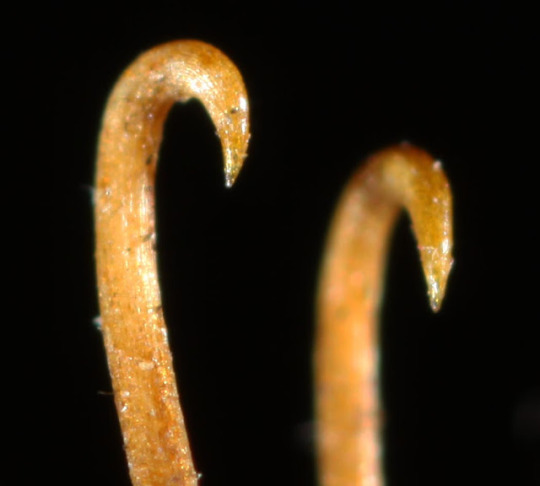
He took the seed and looked at them through a microscope to find that this seed
attaches to animal fur via the hooks on its surface to improve
distribution.
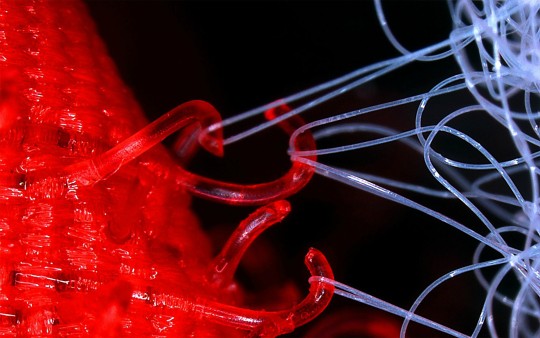
These hooks would latch onto anything loop-shaped, such as the fibers in his pants and his dog’s tangled fur. This inspired him to come up with the ‘Velcro’.
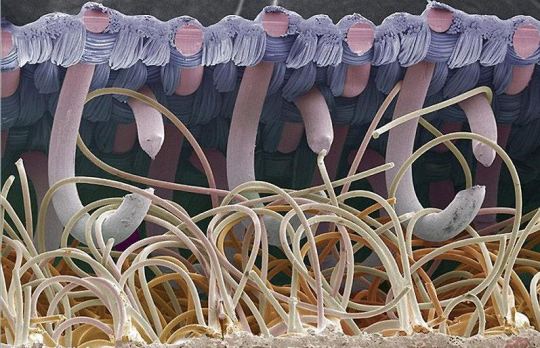
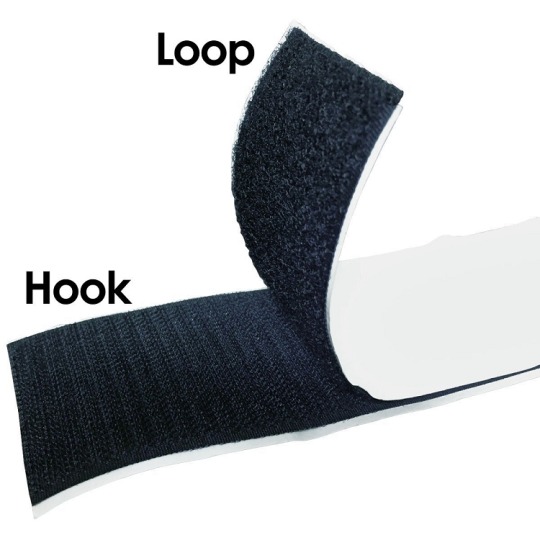
Velcro is a bio-mimicry of this burrs with small flexible hooks attached on its surface to attach to fluffy surfaces.
Although it goes by the name Velcrothe generic name is a hook-and-loop fastener)
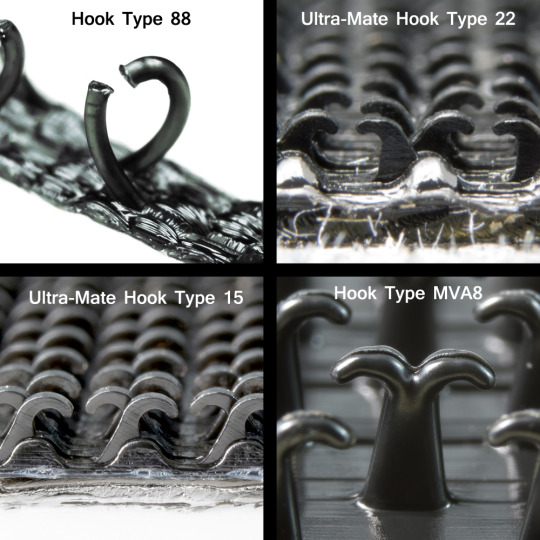
And depending on the load that needs to be held there are different types of hooks that are available:
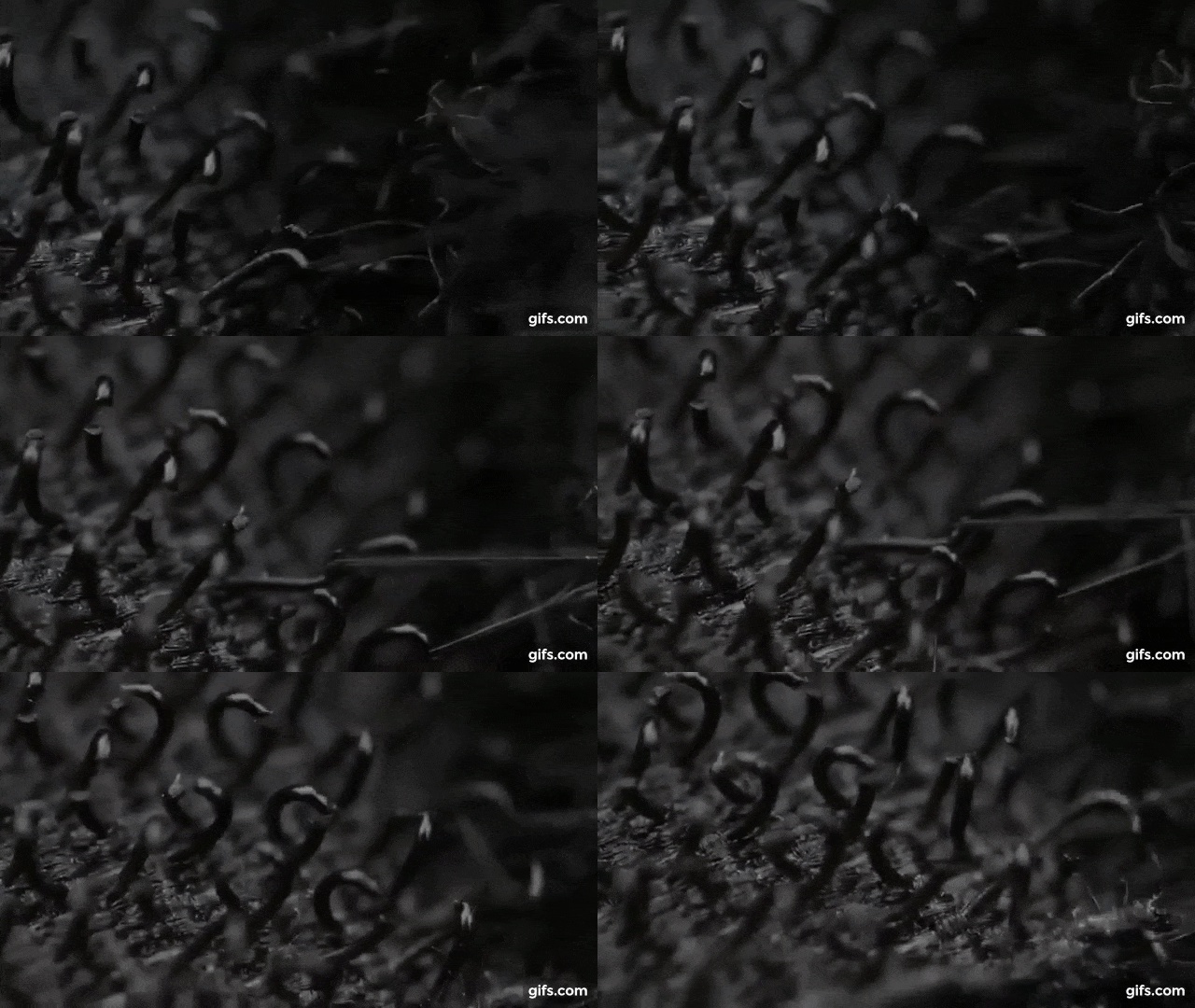
The sound that the velcro makes when you rip it apart is oddly satisfying. It is made when the loops are ripped apart from the hooks.
It was always in my head that the hooks or the loops would break whenever you would rip it apart. But turns out, they are extremely flexible.
For a long time I believed that this was the end of the story and that’s how far we had gone. But recently when I was trying to mount a board to the wall, I came across the 3M dual lock fasteners.
These use a mushroom shaped hook on both the sides to snap together in place.
And evidently it turns out the mushroom fastener design were inspired from dragonflies who used it for stability during mating (check source video above for more).
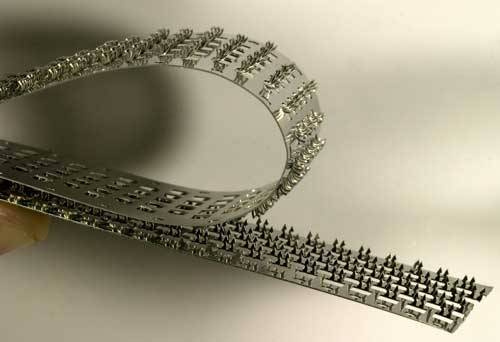
This is great, but since this is made of plastic this surely would fail at higher temperatures. You need something robust to handle higher temperatures, and this is where the Metaklett comes into the picture:
A square metre of this fastener, called Metaklett (made of steel), is capable of supporting 35 tonnes at temperatures up to 800 ºC, (Video)
There is something exotic in the blend of nature and technology that is manifested in the Velcro, I just cannot put my hand on what it is.