New language learners often look at others and think learning vocabulary is something that happens quickly. They seek for ways to speed up their vocabulary retention. It’s not wrong to look for ways to learn faster, but one needs to keep in mind that having vocabulary words stick in your long-term memory takes a while!
GOLDLIST Lots of people use the Goldlist Method for remembering vocab. However, it is not my favorite because of the long time between learning a word and reviewing it again, but it’s nice and structured.
FLASHCARDS Write the word on one side of a card/paper and on the back write it’s meaning/pronunciation/usage. If you don’t like paper you can use apps like Anki. You can go further and categorize the cards into piles of “know” “review” and “new”.
REMEMBERING WORDS Make sure to use your words as soon as you learn them. You can write them in sentences and have them checked on websites like italki, or you can use it with a native speaker and ask them to correct you if you use the word wrong.
LABELLING You can label things around your room/house. Stick a piece of paper to your fridge that lists the word for “fridge” in your TL. You can do it with anything from your mirror to your closet to your potplant.
SHOPPING LISTS/PLANNERS I usually write my shopping lists and planner/diary entries in another language. For example, if I have a “meeting”, I won’t write it in English, but rather in a language I’m learning. Especially if it’s a new word (like “call plumber”, for example), writing it down more than once in your planner will engrain it into your memory if you use it enough.
NOTETAKING I find it much faster to write notes using Chinese characters/Korean words mixed in with English. It sounds insane, but writing “名” is much faster than writing “name”. Fellow students in university used to get frustrated when they asked to borrow my notes because half of it wasn’t English. I guess this is just for speed rather than vocab retention. You can make up your own ways to write things. For example, instead of writing “design”, a word I use a lot, I take the Korean word 디자인 and shorten it to ㄷㅈ – two characters which are super fast to write!
F I N D I N G N E W W O R D S
Watching TV shows/movies/dramas can help you pick up new words easily if you make sure to write them down when you encounter them. Korean/Japanese/Chinese shows are especially good because they often put the word being said on the screen (especially with explanations or something funny someone said). You can also watch shows with subtitles in your TL rather than your native language so you’re sure about the spelling.
Listening to music/radio/podcasts: Same concept. You might not know how to spell the word that you hear, but you can try, and then type it in to a dictionary app and check if you were right. In terms of checking word meanings, you can also do a google search/other search engine search with the word to see what pictures come up.
1. You can communicate through windows 2. Sign language is a 3-D Language 3. You can sign with your mouth full 4. Hearing parents can communicate with their Deaf child 5. You can sign underwater 6. Sign Language is a neat way to express yourself 7. You can communicate across a room or via mirror without shouting 8. Sign language is beautiful 9. You can make friends with Deaf people 10. Sign language brings together Hearing & Deaf people
Also if you really want to learn most deaf people are so happy that you are interested in learning and will be super patient and work with you.
And it’s a really great thing to be able to do for any job because imagine having to go everywhere with someone that can translate for you or with paper to write or trying to read lips and just going to grab a cup of coffee and Hey, the barista knows sign language. They aren’t great but you get to speak with them and order your coffee in the way that’s natural to you like that would just make your day. Or a teacher that can talk and sign so classes don’t have to divide?? Or a therapist that can sign?? Hearing people signing 2k15 honestly.
I’ve been learning to help my HoH/deaf customers, so have some links!
you can usually find a capital at the beginning of a sentence (Le train entre en gare) and of a proper noun (first name, city, country, planet…)
II. at the beginning of sentences :
you capitalise a/ the first letter of the first mot of a sentence, b/ the first word after an hyphen (un trait d’union -) or a colon (un deux-points 🙂 that expressed direct speech (ex : Elle m’a répondu : “ Je ne viendrai pas. “, c/ at the beginning of verses in classic poetry (ex : Maître Corbeau, sur un arbre perché…)
III. at the beginning of proper nouns :
you capitalise a/ the first letter of a first name or last name (Marianne Dumaret), nb : the preposition in compound names and the article in compound surnames don’t take a capital, ex : Jean de La Fontaine, Pierrot le Fou, b/ the first letter of titles (Madame la Comtesse, Votre Altesse), c/ the first letter of the names of locations, historical monuments or political institutions (la Loire, la Bastille, l’Assemblée nationale), nb : when a location has a compound noun, nouns take a capital but articles or prepositions don’t (Trouville-sur-Mer), d/ the first letter of the nouns of social and cultural institutions (la Sécurité sociale, l’Académie française), e/ the first letter of nouns expressing historical periods (les guerres de Religion, la Libération, la Renaissance)…
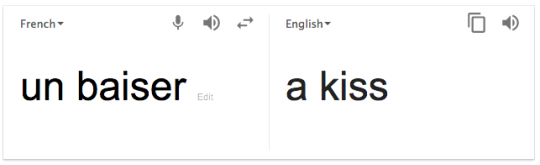
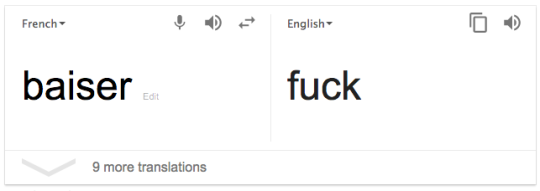
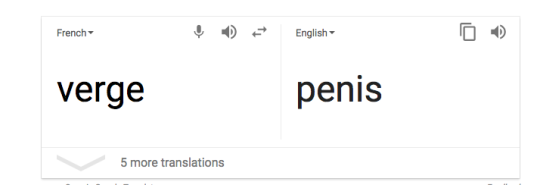
@indigopersei is the french language just always on the verge of getting someone accused of assault or..?
my friend, if only you knew
It’s a very dangerous language to learn
Here’s an interesting thing about French! Everything needs to have an article in front of it. That’s why it’s “la chat” as opposed to just “chat”. So, for instance, you could say la fille for the girl, or jeune fille for young girl, but you can’t just say fille, because that means you are calling her a sex worker in a derogatory way.
The moral of the story is, if you want to make something rude in French, just take out the article in front of it. Yes, this works for nearly. every. word.
Every year. Every year there’s that kid who forgets that you can’t translate “I am excited” to “Je suis excitée”. And every year Monsieur Jordan has to slam the brakes before that kid can finish his sentence and then tactfully ask him not to announce to the class that he is horny.
“is the french language always on the verge” oh buddy, oh pal, i am so happy to break this news to you:
“As our linguist, Tyler will play a critical role in keeping the language alive and preserving our culture,” said John Barbry, director of development and programing for the Tunica-Biloxi LCRP…



Tyler Whitaker


 rip tumblr