a quine is any piece of code that generates itself as output and this guy on github made a 100-piece quine relay that generates itself as output after iterating over 100 different programming languages, a quine that works even if you delete one character from anywhere in the code, and a 3d-printed cylinder engraved with ruby code to generate a .obj file of itself
Gaelic hasnt been lost. It’s never died or been brought back. There’s an unbroken line of native speakers going back to the beginning of the language. That doesn’t seem like a ‘lost’ language to me. Furthermore I’m not sure what ‘artificial life-support’ means in this context. Gaelic is given funding for schools because there’s still native speakers of the language. It’s no more artificial than money being given to schools for English language lessons.
If anything is ‘artificial’ its the imposition of a foreign language
(English) into a Gaelic majority zone and native speakers having to
fight for decades to be able to be taught in their own language. Native speakers being forced to learn English to exist within their own regions because a central government would not allow services to be given in a people’s own language.
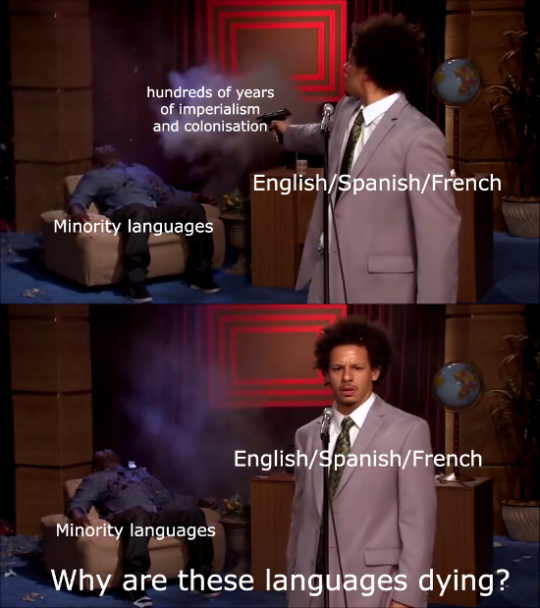
But then the clock only goes back so far with people who wish that minority languages would just die. There’s nothing artificial about shooting someone but suddenly it becomes an ‘artificial’ act to maybe phone an ambulance?
“There’s nothing artificial about shooting someone but suddenly it becomes an ‘artificial’ act to maybe phone an ambulance?” — THIS RIGHT HERE
Also just gonna point out here:
In the UK, the languages Gaelige, Gaelic, Cymraeg and Kernewek (that’s Irish, Scottish, Welsh and Cornish respectively) didn’t just “die out.” There was a concerted effort by the English to kill them off.
For example, in Wales, if a child was heard speaking Welsh in a classroom, they’d be given a “Welsh Not”, a wooden plaque engraved with “WN” to hang around their neck. They’d pass it onto the next child heard speaking Welsh, and whoever had the Welsh Not at the end of the day was punished – usually with a beating.
Kernewek was revived after a long hard struggle by the Cornish folk, and is now being taught again, but a lot about it has been lost because everyone who grew up speaking it has died.
And languages are never revived “just because.” The language of a place can offer so much insight into its history, so if you’re content to let a language die then you’re content to let history die.
People talk about “dead” languages as if they dwindle away gradually, naturally coming to an end and evolving into something else, but that’s rarely the case. Languages like Cymraeg and Gaelige and especially Kernewek didn’t have the chance to die with dignity, they were literally beaten out of my parents and grandparents.
Is it any wonder every other country hate the English? We invade their country, steal their history, claim pieces of their history as ours or flat out re-write it, and kill every part of their culture that we can.
It’s a miracle that any of the Celtic languages survived, so even if you don’t see the point in keeping them alive, the actual natives of each country we’ve fucked over are clinging onto what heritage they have left through the only thing they can: their language.
Hey OP, póg mo thóin!
*snerk* xD
I would like to point all of these “just let it die” assholes directly at Hebrew.
The language was effectively dead. It had been murdered and forced-assimilated away.
But there was this dude named Ben Yehuda.
And he said “no.”
“The language of my people for four thousand years or more,” he said, “should not stop existing because of a bunch of assholes.” (Okay, this is a dramatic retelling. He probably didn’t actually say assholes.)
So he started an official movement to recreate Hebrew as closely as possible to how it had been spoken about a thousand years prior.
Today, ancient Hebrew is spoken by millions of Jews around the world weekly in our prayers and Torah readings, and modern Hebrew is the official language of eight and a half million people–many of them having been born speaking it as a first language. Many people in the first group also speak at least some modern Hebrew–and it’s possible you do, too! A lot of loan words from Hebrew and Yiddish have made their way into English (like klutz, mensch, and kibitz).
That’s hardly “on life support.” Hebrew is growing, living, and thriving because of the Enlightenment efforts of the 1800s. The same COULD be done for languages like Welsh, Navajo, and Basque if the larger powers that be said “this is important” rather than forcing a giant bastion of culture–the language in which a people lived, loved, thought, told stories, and explained their world–to die.
there is a distinct difference between language that has died because it stopped meeting the needs of the people using it and language that has been deliberately killed by oppressors
I remember reading a linguist’s thoughts on this a while back. They noted that languages are not only an important cultural heritage, but also an important historical artifact that offers a look into the unique perspective of a culture. The things that we name and how we name them reflect our values and priorities. For example, Inuktitut is said to have several different words for snow that categorize them by various metrics. This reflects a need for communication regarding what the snow was like, which naturally would be important to a people who deal with snow on a near constant basis. There are nine different ways to say “you’re welcome” in Native Hawaiian, each responding to a different level of gratitude. You don’t respond the same way to “thanks for giving me a donut” as you do to “thanks for saving my life.” This reflects a culture of accountability and honor.
The study and preservation of indigenous languages worldwide is vital to the enrichment of our global culture. You don’t have to be fluent in multiple languages to be able to understand the perspective that is offered by nurturing this tradition. Our ability to communicate is one of our greatest gifts – what a waste it would be to throw that away simply because providing institutions of cultural heritage is too inconvenient.
My step sister is among the first generations of non-Cree as primary language speakers from her Nation.
A hundred years of residential schools, four hundred years of genocide, and Cree is not a dead language. It survives and it will thrive, as long as our society places value on it.
I can go most places in my city and hear Indigenous languages, because they live. They aren’t dead.
Also, I wonder if OP feels this way about Latin, which is used, for example, in naming scientific specimens. Why use a dead language for that?
Those marked with an * are only done when speaking informally and often considered ‘messy’! Please don’t write like this, use the correct way in writing or speaking in a professional environment!
1. Mesh together prepositions and articles
This is something we do a lot and not doing it makes you sound very formal. Unlike some of the other things on this list, it acceptable to do this in writing as well. This is only done with the article dem and sometimes with das and der too. The following are only a few examples to show how it works:
zu + dem = zum; zu + der = zur
an + dem = am; an + das = ans
in + dem = im; in + das = ins
von + dem = vom
etc.
If we want to stress the object, however, we don’t combine them:
In welchem Haus wohnst du? – In dem Haus. Which house do you live in? – In that one.
Note: In some cases, you cannot dissolve the combination. That is the case in fixed phrases that don’t change depending on cases. “Zum Beispiel”, for example (haha, I’m so funny), is one. You cannot say “zu dem Beispiel”.
2. Leave out ‘e’ *
This is done mainly with first person verbs and in verb+es constructions. This is acceptable in informal writing but should not be done in essays, books, articles, or anything of the sort.
Ich habe mein Buch vergessen. – Ich hab mein Buch vergessen.
Wie geht es dir? – Wie geht’s/gehts dir?
Note regarding the apostrophe: in cases where verb+es is shortened to verb+s, an apostrophe is not absolutely necessary, according to Duden. However, many people use it anyway.
3. Mess up word order in ‘weil’ sentences *
So… German has strict word order. But we like to bend the rules a lot. In sentences with ‘weil’ especially. Usually, this kind of clause requires different word order than a normal sentence but we’re lazy and often pretend like there’s a … after the ‘weil’ and we get to start a new sentence with the normal word order.
Correct word order: Ich habe keine Energie, weiles mir heute nicht so gut geht.
Colloquial way: Ich habe keine Energie, weil (…) es geht mir heute nicht so gut.
4. Ignore Präteritum completely *
You do not do this in writing!! But often times we ignore the existence of Präteritum completely, especially here in the South. You learn that for things that weren’t that long ago, we use Präteritum…. It’s not true. Colloquially, we use Perfekt for almost everything. But you still need to learn it because most fictional books are written in Präteritum and you do need to be able to use it for writing or speaking in a professional environment.
5. Leaving out ‘ei’ in ‘ein/eine/einen’ *
While speaking or in informal writing, many of use shorten ‘ein’ and its forms by leaving out the ei:
ein – ‘n
eine – ‘ne
einen – ‘nen
einem – ‘nem
einer – ‘ner
Note: in middle and northern Germany people will often use ‘n and ‘nen interchangeably, so don’t let that confuse you.
6. ‘Is’ (+’er’/’es’) *!!!
A lot of times we leave out the last ‘t’ of ‘ist’ when speaking. Many times this also causes ist+es or ist+er to merge into one word.
Es ist kalt draußen. – Es is kalt draußen.
Ist er noch da? – Is er (or: isser) noch da?
Ist es fertig? – Is es (or: isses) fertig?
This is never ever acceptable in writing (except for when you’re texting friends) !!!!!!!!
is “chai” a TYPE of tea??! bc in Hindi/Urdu, the word chai just means tea
its like spicy cinnamon tea instead of bland gross black tea
I think the chai that me and all other Muslims that I know drink is just black tea
i mean i always thought chai was just another word for tea?? in russian chai is tea
why don’t white people just say tea
do they mean it’s that spicy cinnamon tea
why don’t they just call it “spicy cinnamon tea”
the spicy cinnamon one is actually masala chai specifically so like
there’s literally no reason to just say chai or chai
They don’t know better. To them “chai tea” IS that specific kind of like, creamy cinnamony tea. They think “chai” is an adjective describing “tea”.
What English sometimes does when it encounters words in other languages that it already has a word for is to use that word to refer to a specific type of that thing. It’s like distinguishing between what English speakers consider the prototype of the word in English from what we consider non-prototypical.
(Sidenote: prototype theory means that people think of the most prototypical instances of a thing before they think of weirder types. For example: list four kinds of birds to yourself right now. You probably started with local songbirds, which for me is robins, blue birds, cardinals, starlings. If I had you list three more, you might say pigeons or eagles or falcons. It would probably take you a while to get to penguins and emus and ducks, even though those are all birds too. A duck or a penguin, however, is not a prototypical bird.)
“Chai” means tea in Hindi-Urdu, but “chai tea” in English means “tea prepared like masala chai” because it’s useful to have a word to distinguish “the kind of tea we make here” from “the kind of tea they make somewhere else”.
“Naan” may mean bread, but “naan bread” means specifically “bread prepared like this” because it’s useful to have a word to distinguish between “bread made how we make it” and “bread how other people make it”.
We also sometimes say “liege lord” when talking about feudal homage, even though “liege” is just “lord” in French, or “flower blossom” to describe the part of the flower that opens, even though when “flower” was borrowed from French it meant the same thing as blossom.
We also do this with place names: “brea” means tar in Spanish, but when we came across a place where Spanish-speakers were like “there’s tar here”, we took that and said “Okay, here’s the La Brea tar pits”.
Or “Sahara”. Sahara already meant “giant desert,” but we call it the Sahara desert to distinguish it from other giant deserts, like the Gobi desert (Gobi also means desert btw).
Languages tend to use a lot of repetition to make sure that things are clear. English says “John walks”, and the -s on walks means “one person is doing this” even though we know “John” is one person. Spanish puts tense markers on every instance of a verb in a sentence, even when it’s abundantly clear that they all have the same tense (”ayer [yo] caminé por el parque y jugué tenis” even though “ayer” means yesterday and “yo” means I and the -é means “I in the past”). English apparently also likes to use semantic repetition, so that people know that “chai” is a type of tea and “naan” is a type of bread and “Sahara” is a desert. (I could also totally see someone labeling something, for instance, pan dulce sweetbread, even though “pan dulce” means “sweet bread”.)
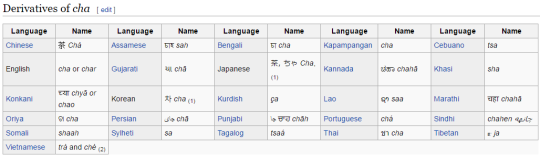
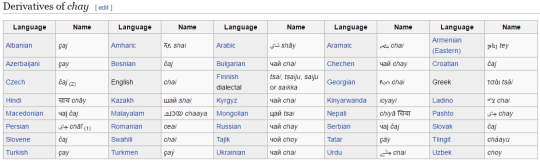
Also, specifically with the chai/tea thing, many languages either use the Malay root and end up with a word that sounds like “tea” (like té in Spanish), or they use the Mandarin root and end up with a word that sounds like “chai” (like cha in Portuguese).
So, can we all stop making fun of this now?
Okay and I’m totally going to jump in here about tea because it’s cool. Ever wonder why some languages call tea “chai” or “cha” and others call it “tea” or “the”?
It literally all depends on which parts of China (or, more specifically, what Chinese) those cultures got their tea from, and who in turn they sold their tea to.
The Portuguese imported tea from the Southern provinces through Macau, so they called tea “cha” because in Cantonese it’s “cha”. The Dutch got tea from Fujian, where Min Chinese was more heavily spoken so it’s “thee” coming from “te”. And because the Dutch sold tea to so much of Europe, that proliferated the “te” pronunciation to France (”the”), English (”tea”) etc, even though the vast majority of Chinese people speak dialects that pronounce it “cha” (by which I mean Mandarin and Cantonese which accounts for a lot of the people who speak Chinese even though they aren’t the only dialects).
And “chai”/”chay” comes from the Persian pronunciation who got it from the Northern Chinese who then brought it all over Central Asia and became chai.
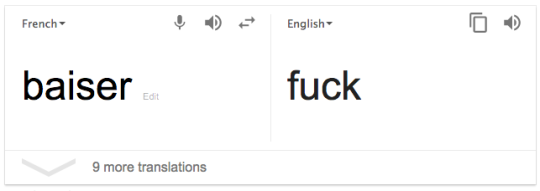
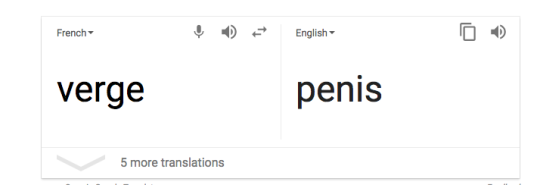
@indigopersei is the french language just always on the verge of getting someone accused of assault or..?
my friend, if only you knew
It’s a very dangerous language to learn
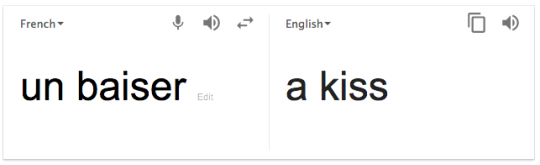
Here’s an interesting thing about French! Everything needs to have an article in front of it. That’s why it’s “la chat” as opposed to just “chat”. So, for instance, you could say la fille for the girl, or jeune fille for young girl, but you can’t just say fille, because that means you are calling her a sex worker in a derogatory way.
The moral of the story is, if you want to make something rude in French, just take out the article in front of it. Yes, this works for nearly. every. word.
Every year. Every year there’s that kid who forgets that you can’t translate “I am excited” to “Je suis excitée”. And every year Monsieur Jordan has to slam the brakes before that kid can finish his sentence and then tactfully ask him not to announce to the class that he is horny.
“is the french language always on the verge” oh buddy, oh pal, i am so happy to break this news to you:
I know I haven’t covered the Subjunctive on this blog yet, but for some of you this is review. I hope I can make this as clear as I can (because anyone who studies French knows how murky the water can be).
The Subjunctive uses:
To express doubt
To express an attitude
To express and opinion
To imply a hypothesis
How to Conjugate the verbs:
Conjugate your verb for the 3rd person noun (Ils/Elles). For Nous and Vous, use their “Imparfait” endings
Take off the ending -ENT and add the following endings
Regular -ER verbs
Je parle
Tu parles
Il/Elle/On parle
Nous parlions
Vous parliez
Ils/Elles parlent
Regular -IR verbs
Je finisse
Tu finisses
Il/Elle/On finisse
Nous finissions
Vous finissiez
Ils/Elles finissent
Regular -RE verbs
J’attende
Tu attendes
Il/Elle/On attende
Nous attendions
Vous attendiez
Ils/Elles attendent
3. Enjoy the easiest part of the Subjunctive because it’s about to get real.
4. Cry because of all of the irregular verbs
Aller -> aille, ailles, aille, allions, alliez, aillent
Avoir -> aie, aies, ait, ayons, ayez, aient
Être -> sois, sois, soit, soyons, soyez, soient
Faire -> fasse, fasses, fasse, fassions, fassiez, fassent
Pouvoir -> puisse, puisses, puisse, puissions, puissiez, puissent
Hi! Language and culture are tightly connected. Language is formed by culture and culture is influenced by language.
One great example of the connection between a language and a culture is these so-called “untranslatable” words, or words that lack direct equivalent in other languages, as I prefer to say. Let’s take an example. The Finnish word “sisu” has no direct equivalent in other languages, but it is often translated as “guts”, “bravery”, “resilience”, “hardiness”, or “grit”. If you don’t know about Finnish culture and history you won’t truly grasp the meaning of the word and what it means to Finnish people and their national character even if I provide you all those words that kind of describe it but not really.
Another example would be the Japanese words “本音” (honne) and “建前” (tatemae). Jisho.org translates them as “real intention; true opinion, what one really thinks” (honne) and “face; official stance; public position or attitude” (tatemae). These translations probably don’t say much to you unless you know about Japanese culture, behaviour patterns, and communication styles.
Another example of why language and culture are connected are jokes. You may be advanced in a language and understand every single word but still not quite figure out what was so funny about the joke that was just told to you. If you understand the culture, you’ll understand the sense of humour the people of the culture share and you’ll understand the jokes. This applies to memes as well.
Understanding the culture is not only important for understanding “untranslatable” words or jokes, but also important for avoiding misunderstandings and conflicts. In the beginning of my Japanese learning journey I used to make a lot of Japanese people uncomfortable and even get into conflicts with them because even though I was speaking their language, I was acting like a Finnish person. I didn’t understand what they were really thinking because I didn’t understand their culture. Now that I do know about their culture and understand their communication styles I can adjust my behaviour and language in such way that it doesn’t make Japanese people uncomfortable anymore and I haven’t gotten into arguments with them anymore – in fact, I have gotten a lot closer to them because if I speak to them in their language and act in the way that they are used to they trust me.
There are a lot of great quotes that describe how important it is to learn culture along with learning the language but one of my favourites is “the person who learns language without learning culture risks becoming a fluent fool”.
If you’re looking for more proof or information just google “language and culture” and you’ll find a lot of great articles that probably explain it much more
elaborately than I did. Hope this cleared it up a little though!




 rip tumblr