Louie Gong describes his company, Eighth Generation, as “a Native-owned, community-engaged small business that began when I started putting cultural art on shoes.” It’s true, in 2008, Gong began decorating sneakers and skateboarding apparel with indigenous Nooksack patterns — a move that, as a Nooksack himself, set him apart from the non-Native designers who’d been doing so for years. As demand grew, so did Gong’s ambition.
Here you go, kids!
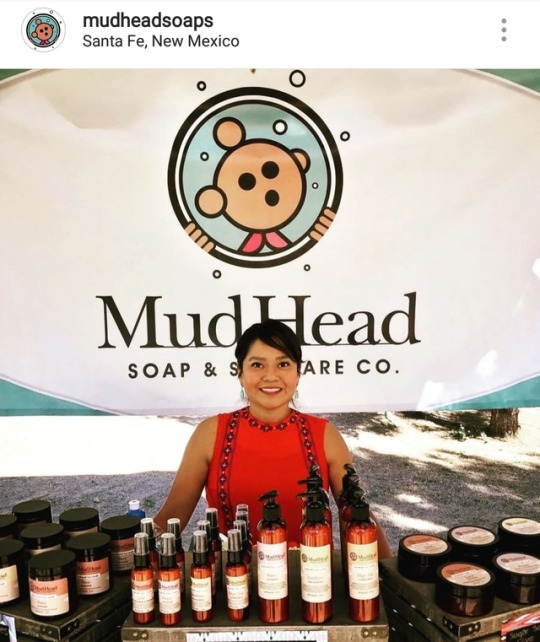
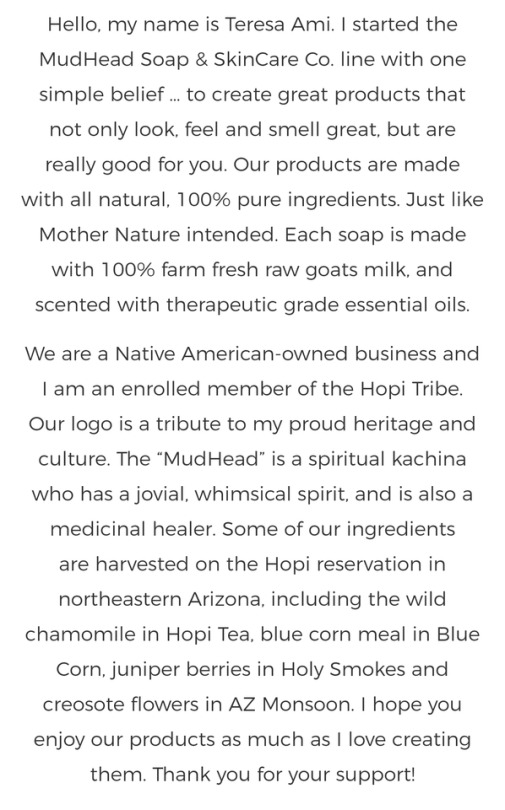
How to procure Native-American-and-First-Nation-themed items without entitlement or cultural appropriation in one easy step.
BUY THE THINGS DIRECTLY FROM THE PEOPLE THEMSELVES.
Because if they’re selling these representations of their culture and being fairly compensated, you’re not appropriating, you’re appreciating. And helping good folks make a living while you’re at it.
Everybody wins.
^^^this is the difference. participate in the parts of culture that people CONSENT to sharing!! it’s that simple, if you buy directly from the source, they are creating with the idea that people outside the culture will be consuming, and can pick and choose what they are okay with you having.
the same idea as wearing traditional dress that someone of that culture gave you as a present vs. buying a knockoff version for “fashion”
I’ve used this argument for a long time as a difference between appropriation and appreciation. If you are buying directly from the people of that culture you are supporting them in keeping certain practices and talents alive. They are choosing what they share while making a living from their work. You are supporting them, while enjoying their culture. This is not only okay but it can really help people from these communities.
With appropriation, you are taking money away from the people. While mocking everything they stand for, and giving money to big companies who only care about profit, and have no understanding of the people they are stealing from.
Eighth Generation is awesome! They ship fast in addition to having gorgeous merchandise. Five stars.
I appreciate everything in this post
Because it took like 4 steps to find the damn thing, here is a link to the place:
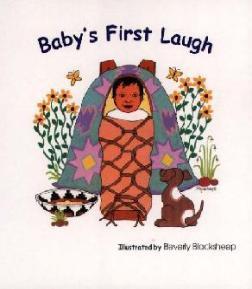
The Navajo have a unique tradition. When a baby is born, it is regarded as the ultimate, precious gift and must never be abused. From the moment of birth, the child is watched over continuously by family and friends, who patiently wait for the child’s first…laugh.
“Has your baby laughed?” is common question posed to parents who have infants around the age of three months. The first laugh of a Navajo child is a very significant event. It marks the child’s final passing from the spirit world to the physical world, meaning he or she is now fully human. This milestone warrants a party, and what a party it is!
Whichever brother, sister, parent, cousin, aunt, uncle, or passing acquaintance is present at the first laugh is deemed to have caused it. The laughter instigator then receives the honored privilege of preparing a special ceremony to welcome the child into society.
Once a baby has laughed, training in generosity begins immediately—a value held in high regard among the Navajo people. At the party, where the baby is considered the host, the parents or person responsible for the first laugh help hold the baby’s hand as he or she ceremonially gives the rock salt, food, and gifts to each guest. There are also bags of candy, money, and other presents that the child “gives” along with the food. [x]
Yes it is true. I have had of a few relatives invite me to a A’wee Chi’deedloh "The Baby Laughed Ceremony" however I have not had the privilege to actually attended one personally. The Dine’ peoples believe that babies are of “two worlds” (Earth people & Holy people) when they are born. The first laugh signifies the babies desire to become a part of the Earth People so it is a great cause for celebration.
Yep, this is apparently an actual thing. The law requiring a residential street address to vote was signed last year, and while it wasn’t in effect during the primaries, it is now. There was an injunction on the law (because, uhhh, YEAH, it’s preventing US citizens from voting), but then the ND district court stayed the injunction, so the NARF obviously wanted to vacate the stay… and that’s what the Supreme Court shot down. That’s a lot of big useless words, so here’s the part that actually matters:
Not only does this disproportionately affect native voters and those under the poverty line (by design, I’d imagine), but that’s also a solid 2.4% of the population. It’s unlikely that a race in North Dakota would be close enough for that to make a difference, but that’s not the point. I know that 2.4% doesn’t SOUND like a big number, but try thinking of it in more… human, terms. One out of every fifty eligible voters in North Dakota is unable to vote under this law. Let that sink in for a minute. Going by averages, every single class in a North Dakota school would have at least one student who had a parent unable to vote.
The native Maori people of New Zealand have tattooed their faces for centuries. They had a complex warrior culture before the arrival of Europeans, and suffered under early colonialism, but have experienced a cultural revival since the 60′s.
The marks are called moko, and are etched with chisels instead of needles to leave grooves along with the ink. The true form is sacred, unique to each person, and distinct from European tattoos that mimic that traditional style.
There arent many pictures non combat related that look this badass
Actually most
Tā moko are done with modern tattoo equipment these days, but some people get them done the traditional way. And, as others have said, they’re not for Non-
Māori, as they have specific meanings and significance. If you want a tattoo with Māori
style, you can get a
kirituhi. These avoid any designs associated with particular tribes or famous people you’re not related to.
Kirituhi is a Māori style tattoo either made by a non-Māori tattooer, or made for a non-Māori wearer. Kirituhi has mana of it’s own and is a design telling the unique story of the wearer in the visual language of Māori art and design. Kiri means ‘skin’, and tuhi means ‘to write, draw, record, adorn or decorate with painting’.
Kirituhi is not restricted to only Māori people, and it is a way for Māori to share our cultural arts with people from around the world in a respectful manner, and for non-Māori artists to enjoy our beautiful art form as well. I happily do kirituhi for my clients around the world and it is a privilege to do such work for them.
Kirituhi is no lesser an artform than moko, however it is different and I believe these differences must be acknowledged and respected, so that the integrity of our taonga Māori – moko, is maintained around the world.
Moko is uniquely Māori and it is strictly reserved to be done by Māori, for Māori.
If either the recipient or tattooer do not have Māori whakapapa, then the resulting design is a Māori Style tattoo or kirituhi, NOT moko. The word moko originated from the Māori atua (god) of volcanic activity and earthquakes, Rūaumoko – therefore the origin of tā moko is divine and sacred – to me this is no small thing, nor should it be dismissed.
As my mentor once told me, ‘moko is about 99% culture, and 1% tattoo’.
What I like about buying from the Red Lake Nation is there is a massive variety and quantity of different wild rice products at many different prices! They are aware that the broken grains are not as quality, but it doesn’t go to waste-you can buy the broken grains for “Soup Bits” ($3.49)which are an inexpensive way to add flavor & nutrition to soups and stews. They also offer “Quick Cook” wild rice ($5.69), which is prepared from a lighter roast/parch process that allows the grains to cook in a shorter amount of time and has a rich, traditional flavor.
BUT! If you’re worried about shipping costs or like me, are disabled/have limited mobility and can’t always get to the store like you might prefer,Red Lake Nation also sells their rice through Amazon, eligible for Prime shipping. This is also good for those, Native or not, who are struggling in the community and share their wishlists for help purchasing food.(Also please know this post is only meant to share information, not to make anyone feel bad or imply they’re eating “inferior” food.)
“As our linguist, Tyler will play a critical role in keeping the language alive and preserving our culture,” said John Barbry, director of development and programing for the Tunica-Biloxi LCRP…
The Navajo have a unique tradition. When a baby is born, it is regarded as the ultimate, precious gift and must never be abused. From the moment of birth, the child is watched over continuously by family and friends, who patiently wait for the child’s first…laugh.
“Has your baby laughed?” is common question posed to parents who have infants around the age of three months. The first laugh of a Navajo child is a very significant event. It marks the child’s final passing from the spirit world to the physical world, meaning he or she is now fully human. This milestone warrants a party, and what a party it is!
Whichever brother, sister, parent, cousin, aunt, uncle, or passing acquaintance is present at the first laugh is deemed to have caused it. The laughter instigator then receives the honored privilege of preparing a special ceremony to welcome the child into society.
Once a baby has laughed, training in generosity begins immediately—a value held in high regard among the Navajo people. At the party, where the baby is considered the host, the parents or person responsible for the first laugh help hold the baby’s hand as he or she ceremonially gives the rock salt, food, and gifts to each guest. There are also bags of candy, money, and other presents that the child “gives” along with the food. [x]
Yes it is true. I have had of a few relatives invite me to a A’wee Chi’deedloh "The Baby Laughed Ceremony" however I have not had the privilege to actually attended one personally. The Dine’ peoples believe that babies are of “two worlds” (Earth people & Holy people) when they are born. The first laugh signifies the babies desire to become a part of the Earth People so it is a great cause for celebration.