Astronomers have detected a small asteroid that doesn’t seem to want to go away. Called a quasi-satellite, this new companion circles around the Earth as it orbits the sun—and it’s going to stay that way for the next few hundred years.
At least eight islands in the Pacific have already disappeared because of rising sea levels. Over the next century many communities, including my family, will be displaced and lose their ancestral lands and foundation of their cultural practices. Trump removing the US from the Paris Agreement, taking climate change off the National Security Strategy, and repealing the Clean Power Plan is a slap in the face and to me, intensely personal. PLEASE contact your representatives regarding climate change and taking steps to counteract the potentially irreversible harm Trump is doing to our planet.
I am working on setting up an online store in the next month or so and it will include all of my Disney Resists prints! 10% of everything in my shop will go to the ACLU and other civil rights groups putting in the time this past year 💛
so uhhhhhh i know this is a plant blog but realtalk lads im a little freaked out by that wild ass new organ discovered in our bodies according to a paper published literally yesterday am i right my lads, my bois, lmao hhaha
(as of 3/28/2019, paper was published in the reputable international research journal “Nature” on 3/27/2018, publication here, study was started in 2013) ok so like uhhh this is my rough translation of the paper they published using my current level of biological knowledge, if anyone else has a more in depth understanding with human anatomy things and would like to add on with anything i might have missed feel free to add but this is my takeaway:
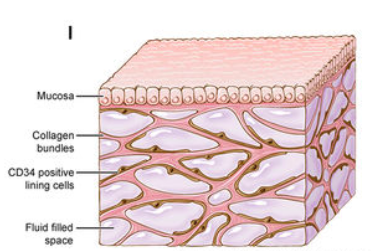
-scientists were looking at some stuff in the inside of a bile duct they were studying in a live patient (this will be important later) using a laser that lets them see the cells in real time. they injected some stuff into the duct and saw the spaces inbetween the cells fill up with fluid in strange, tube-like structures that didn’t correspond with what they expected to be there, so they sectioned and froze them to study them closer; they realized that upon closer inspection, the fluid-filled places were VERY small collagen tubes forming a complex matrix of bundles surrounded by a weird cell covering that seemed to connect them to one another. they called this the Interstitium.
-they sectioned some more places where squeezy things might happen, like the inner linings of the bladder, lungs, lymph nodes, and the soft tissue enclosing our muscles, filled them with the same indicator, and hyper froze them like they did to the first sample and found the same weird matrix of fluid-filled tubing:
they concluded from what they found from this that:
1. our previous thought of the space inbetween the cells in these parts of the body, which we thought were just kinda like, there or whatever doing nothing (a series of spaces that were already called the Interstitium that were largely ignored), are actually full of complex tubing running through a ton of very important parts of your body
2. when the structures they’re chilling around (like your bladder and bowel) contract, the fluid moves around all weird
3. the reason this wasn’t discovered before is because when the tubes are squished too hard- like when scientists are cutting into them- they have a tendency to collapse really easily,especially when being treated with chemicals for microscope use, giving the impression of the kind of tissues that we’ve traditionally seen in specimens and thought of being in these sensitive areas (closely compact and dense cell mats). it turns out that in living people, these tubes run between the cells carrying fluid; the scientists were able to see this initially in live patients using the above mentioned laser technology, and then took live biopsies by quickly freezing the cells in place before removal to prevent their collapse.
4. yes, these can move cancer cells around, which is HUGE seeing as they seem to enclose a LOT of important and delicate muscles in our bodies in one giant, complex system. when they looked at it in cancer patients, the tumors they found seemed to kind of be….leaking….into them…..because the tumors were putting pressure on the fluid tubes….which easily collapse…..and move things that fall into the fluid around….
5. the scientists also explored things like hernias and colon damage in relation to these, but unfortunately this is where my translation powers run out as non-plant-related terminology starts being used lmao im so sorry im like this
tl;dr: the membranes that surround some really important parts of squishy things like our stomach, bowels, colon, lungs, muscles, etc are full of very delicate and complex tubing that runs in a weirdly complex system to other important squishy things throughout our bodies and looks like a weird organ that we didn’t know was there before (or like, we knew about it, we just didn’t know it was so…connected and uh…organy). also it seems to have an impact on the spread of cancer throughout these regions
This summary was great!! I have some more fun translations for y’all:
-the interstitium isn’t so much an organ as a tissue type and it’s p much everywhere you have squishy bits that gotta move
-some cancers can use it to spread (metastasize) to other areas. For example if a dudes got skin cancer but only of the epidermis(v top layer of skin) it’s a p small chance it’ll spread BUT if it gets into the dermis (next layer, where they see this tissue) there’s a much higher chance it’ll spread
-these fluid filled areas could possibly act as one more shock absorbing layer (adipose, or fat, also does this)
-probably also gives organs that move (heart, lungs, stomach, intestines, etc) room to move a bit
-is probably important to a concept called third spacing where fluid collects in your tissues (esp. your legs cuz gravity) bc for some reason your heart isn’t pumping well enough to suck it back up or your kidneys aren’t taking out enough fluid etc etc
-swelling in general is probably super important w/ this
-there are weird flat cells that we don’t really know what they are or what they do yet but we’ve got hypotheses: could be a type of stem cell, could be a type of fibroblast (cell that makes collagen/elastin/etc), could be important to scar formation if so (and a type of scar called keloid scar looks like this tissue but exaggerated)
-may have some big implications for cell to cell communications and inflammatory conditions like IBS/IBD, pancreatitis etc
-we may be able to use this fluid as a diagnostic tool once more research is done
-shows how the specific technology and techniques they used are v v important and how we need WAY more research done in this area
-also cells in the tissue may or may not interact w/ the collagen and that may or may not be important later
domestication syndrome is one of the coolest findings from recent genetics
Yes!
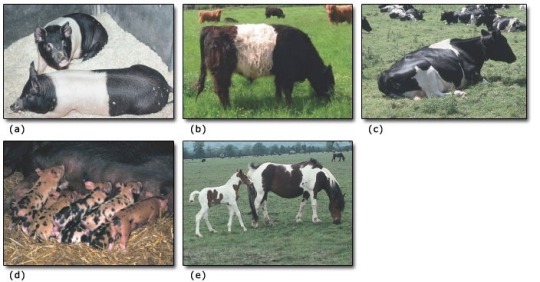
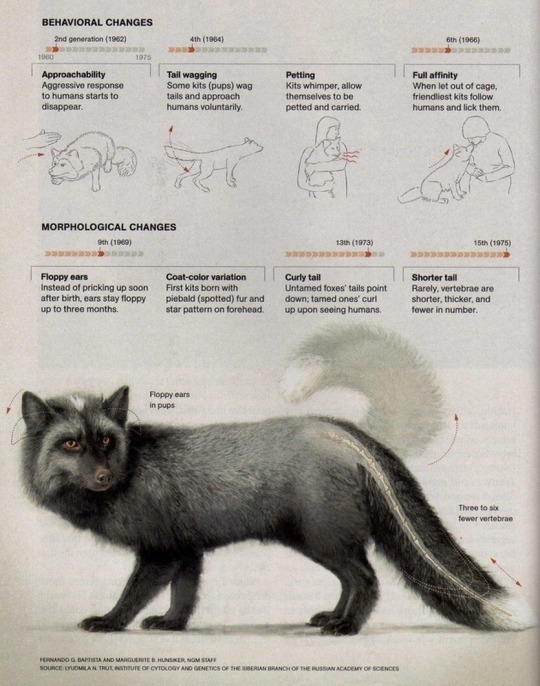
Basically scientists have found that if you start selecting for people-friendly animals, you see a bunch of hypothetically unrelated traits start showing up in all sorts of mammal species: floppy ears, piebald/patterned coats, etc.
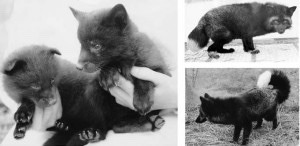
This is true for everything from cows to dogs to rats! One of the coolest long term studies on this has been the Russian fox experiments.
So essentially the science goes like this:
You have two copies of every genes, one from each parent.
We tend to simplify genetics, and say that for every single gene you have it is random,l coin flip which copy you pass on to you offspring. We also tend think of genes as a 1:1 ratio of genes—>traits.
But! This is not quite the case.
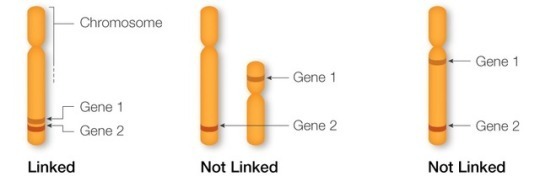
Genes have a specific physical location and order relative to each other on your chromosomes, and the chance of genes being inherited together goes up the closer together they are located. This means random, unrelated traits can wind up being more commonly inherited together in specific patterns just because those genes are located close together, and you don’t get that completely random reshuffling of two parent’s traits. Some of them tend to stay “stuck” together.
This is called linkage, and it’s why you often see red hair, pale skin, and freckles together, for example.
The second factor that plays into this is that a lot of times 1 gene affects several different traits (or several different genes affect 1 trait). This means that sometimes you really *can’t* untangle two traits because they have a similar cause. For example, say genes for increased aggression are responsible both for making a spider a better hunter (pro) and making a spider more likely to eat its offspring (con). Because the same gene is the cause of both things, natural selection can’t really untangle them.
Circling back to the redhead/freckles/pale skin example, these traits are affected by a number of different genes, but also one gene in particular: MCR1, a gene that changes how your body responds to hormones promoting melanin production. Again, one gene related to pigment production can affect a BUNCH of different traits. (And also skin cancer risk. Fun!)
Domestication Syndrome in mammals turns out to be due to both linkage and genes affect by multiple traits!
See, when we domestic animals we want them to be friendlier/less aggressive, which normally translates to less FEARFUL.
And it turns out that the same genes involved in adrenal responses and other stress reactions are also involved in melanin, cartilage, and bone production. So when we domesticate animals we get these recurring changes in pigmentation (white patches, piebald costs), floppy ears (cartilage), shorter muzzles and other changes in physical stature (bone growth), etc.
We also wind up selecting for a lot of neotenic genes in general— that is, retention of childhood traits into adulthood. That’s because baby animals tend to have lots of friendly/trusting/biddable/curious traits we are looking for.
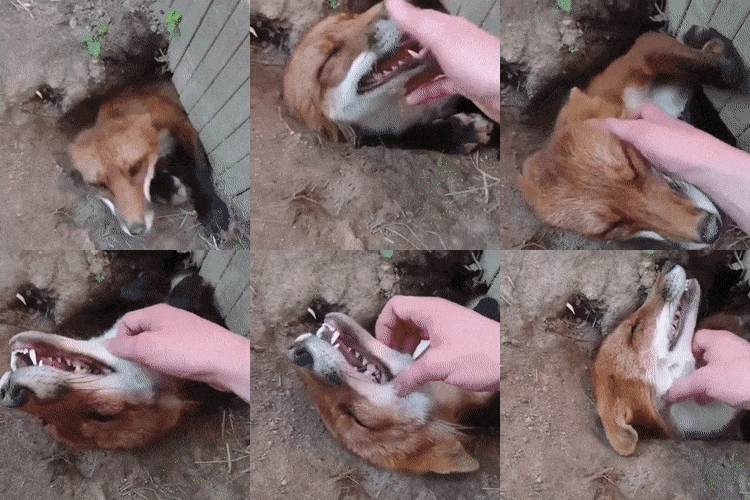
And honestly, who can say no to a face like this?
ps, since it was mentioned:
the same genes involved in domestication probably help animals form social groups in general. if you need to get along with and trust strangers you need a decrease in the panic/aggression genes.
cats, for example, probably domesticated themselves when they started living close to each other and to humans to feed off of pests in grain silos.
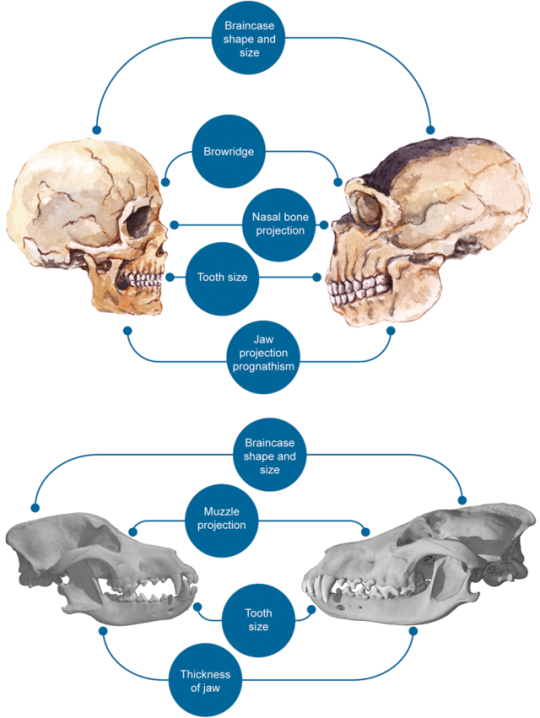
and yeah, some some recent theories suggest humans may have ‘domesticated’ themselves:
so basically you’re saying that when we breed animals to be friends, they become friend-shaped.
A quarkis a type of elementary particle and a fundamental constituent of matter. Quarks combine to form composite particles called hadrons, the most stable of which are protons and neutrons, the components of atomic nuclei.
There are six types of quarks, known as flavors: up, down, strange, charm, top, and bottom Up and down quarks have the lowest masses of all quarks. The heavier quarks rapidly change into up and down quarks through a process of particle decay: the transformation from a higher mass state to a lower mass state. Because of this, up and down quarks are generally stable and the most common in the universe, whereas strange, charm, bottom, and top quarks can only be produced in high energy collisions (such as those involving cosmic rays and in particle accelerators).
Due to a phenomenon known as color confinement, quarks are never directly observed or found in isolation; they can be found only within hadrons, such as baryons (of which protons and neutrons are examples) and mesons. For this reason, much of what is known about quarks has been drawn from observations of the hadrons themselves.
This movie illustrates the action inside the nucleus of a deuterium atom containing a proton and a neutron, each with three quarks. An electron strikes a quark inside a proton, passing energy to the quark before the electron bounces back. The quark now has so much energy “stuffed” into it, it creates a cascade of new particles as it flies out of the proton. The result is two new, two-quark particles.
Quarks have various intrinsic properties, including electric charge, mass, color charge, and spin. Quarks are the only elementary particles in the Standard Model of particle physics to experience all four fundamental interactions, also known as fundamental forces (electromagnetism, gravitation, strong interaction, and weak interaction), as well as the only known particles whose electric charges are not integer multiples of the elementary charge.
An animation of the interaction inside a neutron. The gluons are represented as circles with the color charge in the center and the anti-color charge on the outside.
Mass
Current quark masses for all six flavors in comparison, as balls of proportional volumes. Proton and electron (red) are shown in bottom left corner for scale.
Two terms are used in referring to a quark’s mass: current quark mass refers to the mass of a quark by itself, while constituent quark massrefers to the current quark mass plus the mass of the gluon particle field surrounding the quark. These masses typically have very different values. Most of a hadron’s mass comes from the gluons that bind the constituent quarks together, rather than from the quarks themselves.
Field lines from color charges
In quantum chromodynamics, a quark’s color can take one of three values or charges, red, green, and blue. An antiquark can take one of three anticolors, called antired, antigreen, and antiblue (represented as cyan, magenta and yellow, respectively). Gluons are mixtures of two colors, such as red and antigreen, which constitutes their color charge. QCD considers eight gluons of the possible nine color–anticolor combinations to be unique.
Spin
In quantum mechanics and particle physics, spin is an intrinsic form of angular momentum carried by elementary particles, composite particles (hadrons), and atomic nuclei.
Spin is one of two types of angular momentum in quantum mechanics, the other being orbital angular momentum. The orbital angular momentum operator is the quantum-mechanical counterpart to the classical angular momentum of orbital revolution: it arises when a particle executes a rotating or twisting trajectory (such as when an electron orbits a nucleus)
Gluon
A gluon is an elementary particle that acts as the exchange particle (or gauge boson) for the strong force between quarks. It is analogous to the exchange of photons in the electromagnetic force between two charged particles. In layman’s terms, they “glue” quarks together, forming protons and neutrons.
Baryons and Mesons
A baryon is a composite subatomic particle made up of three quarks. Baryons and mesons belong to the hadron family of particles, which are the quark-based particles.
As quark-based particles, baryons participate in the strong interaction, whereas leptons, which are not quark-based, do not.
In particle physics, mesons are hadronic subatomic particles composed of one quark and one antiquark, bound together by the strong interaction. Because mesons are composed of quark sub-particles, they have a physical size, with a diameter of roughly one femtometer, which is about 2⁄3 the size of a proton or neutron. All mesons are unstable, with the longest-lived lasting for only a few hundredths of a microsecond. Charged mesons decay (sometimes through mediating particles) to form electronsand neutrinos. Uncharged mesons may decay to photons. Both of these decays imply that color is no longer a property of the byproducts.
I honestly believe the whole “adults require less sleep” thing is honest to god probably a myth created by capitalism
It is.
i honestly believe that sleep deprivation is the biggest ignored/neglected root cause of health dangers that prematurely kill adults
ask me sometime about the role of sleep in the leptin ghrelin cycle and how its interruption destabilizes weight homeostasis
or about the new research showing that heart disease is not caused by fat, like we thought for years, but by inflammation in the circulatory system whose root cause is unknown but one of the prime suspects is, you guessed it, sleep deprivation
but nobody wants to hear that lack of sleep is killing people. employers don’t want to hear it. and god knows that having sold their waking hours to capitalism to survive workers don’t want to lose the only time they have left to them to live their lives, mostly stolen from sleep
i mean even i don’t want to do anything about it and i love sleep, i just love overwatch more
this this this this this
our society places almost zero value on sleep
on enough sleep
on uninterrupted sleep
on regular, predictable, cycling sleep
all the evidence we have suggests sleep is really, really, really important to the processes of the human body, including both mental and physical health, and yet when was the last time you heard somebody suggest that people had a *right* to sufficient, regular sleep?
Reminder that
– Humans are not meant to sleep for extended periods of uninterrupted sleep.
By this I don’t mean “humans shouldn’t have 8+ hours of sleep a night”; I mean that we are supposed to sleep for four to five hours (ish), then get up and do something relaxing like reading for a half hour to an hour, then get another bout of four to five hours. This is what our bodies were designed for.
Sleeping the whole night through was a fad started with the advent of the lightbulb. Sleeping the whole night through is so recent (and artificial) that First Sleep and Second Sleep are mentioned in Dickens’ novels.
– Lack of sleep for even a single night severely compromises your immune system.
If you’re planning on getting little sleep or pulling an all-nighter, make sure to eat lots of fruit and veggies/take vitamins that day. Or even better, get yourself some bee propolis. It’s a natural remedy used for thousands of years in Latin America and is insanely good for boosting up compromised immune systems (if you get the drop kind, put 3 to 4 drops in a spoonful of honey and mix well with a 2nd spoon to mask the strong taste). It has no side effects and is all but impossible to overdose on.
– According to several government bodies around the world, chronic lack of sleep is literally tied for 1st place as the worst kind of torture (the other is solitary isolation)
– Expecting a teen to get up for 8:30 classes is the equivalent of expecting an adult to be at work at 4 am.
After babies, teens are the age group that needs the most amount of sleep. Puberty is exhausting, and the body needs time to recharge. Ideally, a teen should be getting between 10 to 12 hours of sleep at the bare minimum. Most teens are lucky if they manage to get 8. And that’s a gigantic problem; not only does lack of sleep affect mood (which is extra significant when your hormones are already riding a rollercoaster to begin with), but also has massive effects on growth, which is kinda what the whole puberty thing is supposed to be about.
– Humans were not designed to have the same sleep cycle across the species. Much the opposite in fact.
Night owls and morning people are an actual thing. Because we’re pack creatures, Nature came up with a clever way for our ancestors to always have someone on the lookout for predators and threats: make people naturally alert at varying times so that there’s always someone alert to keep watch.
Forcing night owls to follow morning people’s sleep cycle means night owls live with what researchers have referred to as “permanent jetlag”.
(points my shaking fist at high school) WHAT DID YOU DO TO ME
Fucking hell
I like how im permanently jetlagged
This is super interesting to me bc I’m SUCH a morning person. Like…the first three minutes of consciousness at 6 am is torture but then I’m wide awake and energetic…until like 3 PM…then I’m exhausted until 8…then awake until midnight…my cycle is sooooo fucked
i took a pic of me watching the pickle rick episode to piss people off but like somehow i managed to take the pic so that the frame on the tv was…. a different frame to the reflection on the desk?
cursed image
this is the most fucked up scenario that accurately depicts that movement of photons through space and time
Einstein would be so upset that you proved his theory in one moment, cause in his day it took fuckin months to setup an eclipse pic to prove relativity n you did it by accident, in ur living room. congrats.
you literally captured whats called “ball lightning” which is the rarest form of lighting
its so rare that we dont even know how it forms other than by heat, static electricity, and humidity
storm elemental it is
look guys this is how nature-based deities and spirits come about this is ridiculous
Are you aware that the first-ever video footage of ball lightning outside a laboratory was taken in 2014 and there are only like 3 or 4 videos like this in existence and this might be the most close-up one






 rip tumblr