literally how hard would it have been for jkr to say something like “listen I was writing it in the 90s, I was inexperienced, I was writing from my own point of view, I didn’t realise how underrepresented a lot of people are, I wasn’t thinking about anything other than the plot, I accept that it’s a little sparse on the diversity front, I can try to be more self aware with my future works” etc etc instead of.. this nonsense
Why do (esp white) men love having fights about politics where they change topics 6x to confuse you and then try and make you look dumb because you can’t jump between the points bc you’re too busy arguing the separate distinct points bc you thought that’s what the fight was about
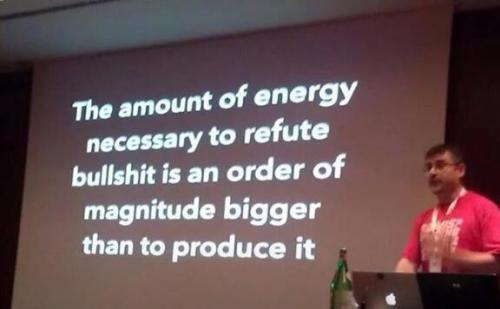
“The Gish gallop allows a debater to hit their opponent with a rapid series of many specious arguments, half-truths and misrepresentations in a short space of time, which makes it impossible for the opponent to refute all of them within the format of a formal debate. In practice, each point raised by the “Gish galloper” takes considerably more time to refute or fact-check than it did to state in the first place,[4] which wastes the opponent’s time and can cast doubt about their debating ability in an audience unfamiliar with the technique, especially if no independent fact-checking is involved.[5] …If one is familiar with an opponent who is known to use the Gish gallop, the technique can be countered somewhat by preempting and refuting their commonly used arguments before they have the chance.[7]“
Or sometimes it could help to point out that they’re doing it, though I suspect the kind of person who does this is the kind of person who responds to “Wow, you’re Gish galloping” with “ad hominem!”
People who do this know they look like they’re winning to the audience. They make lots of short snappy inaccurate points and you’re fumbling to refute with full facts and explanations.
when someone loves you – really loves you – treat them gently. text your best friend back when you can. tell your mother you noticed her haircut and that she was right about that recipe. tell your grandfather that the boats in his bottles are the best things you’ve ever seen. be good to the people who are good to you. it’s the least you can do.
now get ready for the Screaming 20s – coming to a decade near you in 2020
is it too early or can we start screaming now
There’s actually a fair deal of overlap between cultural decades. So not only is it acceptable to start screaming now, we can keep screaming up to the mid 30′s.
not voting isn’t refusing to play the game. You’re in this country, you’re subject to the game whether you like it or not. The only way not to play is to leave, and the vast majority of us don’t have that option.
Not voting is playing the game but saying ‘pass’ every time your turn comes up and then wondering why you lost.
Making young people not vote is actually a tactic used in politics to keep the satus quo. The young vote is always the one for change, so dissuading them from voting at all is actually a political tactic used by the people in charge to keep themselves there.
Those marked with an * are only done when speaking informally and often considered ‘messy’! Please don’t write like this, use the correct way in writing or speaking in a professional environment!
1. Mesh together prepositions and articles
This is something we do a lot and not doing it makes you sound very formal. Unlike some of the other things on this list, it acceptable to do this in writing as well. This is only done with the article dem and sometimes with das and der too. The following are only a few examples to show how it works:
zu + dem = zum; zu + der = zur
an + dem = am; an + das = ans
in + dem = im; in + das = ins
von + dem = vom
etc.
If we want to stress the object, however, we don’t combine them:
In welchem Haus wohnst du? – In dem Haus. Which house do you live in? – In that one.
Note: In some cases, you cannot dissolve the combination. That is the case in fixed phrases that don’t change depending on cases. “Zum Beispiel”, for example (haha, I’m so funny), is one. You cannot say “zu dem Beispiel”.
2. Leave out ‘e’ *
This is done mainly with first person verbs and in verb+es constructions. This is acceptable in informal writing but should not be done in essays, books, articles, or anything of the sort.
Ich habe mein Buch vergessen. – Ich hab mein Buch vergessen.
Wie geht es dir? – Wie geht’s/gehts dir?
Note regarding the apostrophe: in cases where verb+es is shortened to verb+s, an apostrophe is not absolutely necessary, according to Duden. However, many people use it anyway.
3. Mess up word order in ‘weil’ sentences *
So… German has strict word order. But we like to bend the rules a lot. In sentences with ‘weil’ especially. Usually, this kind of clause requires different word order than a normal sentence but we’re lazy and often pretend like there’s a … after the ‘weil’ and we get to start a new sentence with the normal word order.
Correct word order: Ich habe keine Energie, weiles mir heute nicht so gut geht.
Colloquial way: Ich habe keine Energie, weil (…) es geht mir heute nicht so gut.
4. Ignore Präteritum completely *
You do not do this in writing!! But often times we ignore the existence of Präteritum completely, especially here in the South. You learn that for things that weren’t that long ago, we use Präteritum…. It’s not true. Colloquially, we use Perfekt for almost everything. But you still need to learn it because most fictional books are written in Präteritum and you do need to be able to use it for writing or speaking in a professional environment.
5. Leaving out ‘ei’ in ‘ein/eine/einen’ *
While speaking or in informal writing, many of use shorten ‘ein’ and its forms by leaving out the ei:
ein – ‘n
eine – ‘ne
einen – ‘nen
einem – ‘nem
einer – ‘ner
Note: in middle and northern Germany people will often use ‘n and ‘nen interchangeably, so don’t let that confuse you.
6. ‘Is’ (+’er’/’es’) *!!!
A lot of times we leave out the last ‘t’ of ‘ist’ when speaking. Many times this also causes ist+es or ist+er to merge into one word.
Es ist kalt draußen. – Es is kalt draußen.
Ist er noch da? – Is er (or: isser) noch da?
Ist es fertig? – Is es (or: isses) fertig?
This is never ever acceptable in writing (except for when you’re texting friends) !!!!!!!!
KFC Potato Wedges lightly battered in a thin KFC chicken flavored seasoning and double fried until super crispy on the outside and fluffy on the inside.
A 3D mapping model of a chunk of the universe – 380,000 laser-etched dots in a glass sphere each represent a galaxy, and the diameter is 800 million lightyears.(Source)
We out here creating a lil mini universes and shit