Toddlers are so pure. She doesn’t understand that we help her with certain things because she’s little. She thinks that everyone just helps each other like that. So she tries to blow on my food and cut it up for me and tries to help me put on my shoes.
i was giving little wagon rides to a baby around the backyard one day and all of a sudden she hops off and slaps the seat of the wagon telling me to get on because it was my turn and i was like no it’s ok im too heavy and she was like NO ITS UR TURN and kept tugging on my hand so i would sit down. eventually i got on and it was just a little 2 year old trying so hard to push me around on a wagon not understanding why it wouldn’t budge but still so determined to let me have my turn lol
I work at a daycare with 2-year-olds and really frequently when I pass by one of my kids I just give their hair a little pat or ruffle, both as a way of letting them know I’m coming through so they don’t move suddenly and trip me, and just as a way of checking in, saying hey, taking their temp, etc. Well today we were playing inside and I was sitting on the carpet because we were playing ring around the rosie and I was tired, and one of my baby boys came up to me and gave my hair a rub and pat. And like it took me a second to realize what he was doing but, yeah. He was saying “hi.” He was saying “I love you”
When the toddlers ol clean up, we give them ice cubes to suck on and we congratulate them on their hard work. One time when I was helping a boy pick up a huge block and he told me “you need TWO ice cubes”.
its really such an indescribable headspace going on long roadtrips in america (but not taking the scenic highways just using the interstates) like the road looks the same for hours. maybe you start driving into the mountains or you’re going out west and you go from plains to mountains to desert, but for the most part it just looks like trees and two stretches of asphalt for as far as you can see. you pull off at an exit to get something to eat or to get gas and it looks the same as every interstate exit you’ve ever been to. the stores might be different, maybe theres a burger king here where there was a mcdonalds at the last one. maybe its a different gas station chain. there’s a few strip malls but no two have the exact same stores. but it’s all the same. it all feels the same. there is no true sensory indication of where you are. you are both nowhere and anywhere.
We’re going to talk about some of the amazing new things NICER is showing us about black holes. But first, let’s talk about black holes — how do they work, and where do they come from? There are two important types of black holes we’ll talk about here: stellar and supermassive. Stellar mass black holes are three to dozens of times as massive as our Sun while supermassive black holes can be billions of times as massive!
Stellar black holes begin with a bang — literally! They are one of the possible objects left over after a large star dies in a supernova explosion. Scientists think there are as many as a billion stellar mass black holes in our Milky Way galaxy alone!
Supermassive black holes have remained rather mysterious in comparison. Data suggest that supermassive black holes could be created when multiple black holes merge and make a bigger one. Or that these black holes formed during the early stages of galaxy formation, born when massive clouds of gas collapsed billions of years ago. There is very strong evidence that a supermassive black hole lies at the center of all large galaxies, as in our Milky Way.
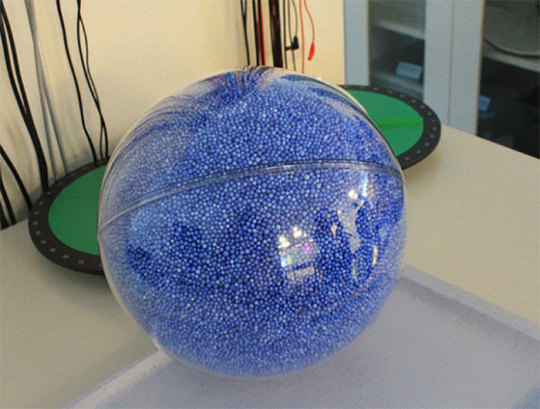
Imagine an object 10 times more massive than the Sun squeezed into a sphere approximately the diameter of New York City — or cramming a billion trillion people into a car! These two examples give a sense of how incredibly compact and dense black holes can be.
Because so much stuff is squished into such a relatively small volume, a black hole’s gravity is strong enough that nothing — not even light — can escape from it. But if light can’t escape a dark fate when it encounters a black hole, how can we “see” black holes?
Scientists can’t observe black holes directly, because light can’t escape to bring us information about what’s going on inside them. Instead, they detect the presence of black holes indirectly — by looking for their effects on the cosmic objects around them. We see stars orbiting somethingmassive but invisible to our telescopes, or even disappearing entirely!
When a star approaches a black hole’s event horizon — the point of no return — it’s torn apart. A technical term for this is “spaghettification” — we’re not kidding! Cosmic objects that go through the process of spaghettification become vertically stretched and horizontally compressed into thin, long shapes like noodles.
Scientists can also look for accretion disks when searching for black holes. These disks are relatively flat sheets of gas and dust that surround a cosmic object such as a star or black hole. The material in the disk swirls around and around, until it falls into the black hole. And because of the friction created by the constant movement, the material becomes super hot and emits light, including X-rays.
At last — light! Different wavelengths of light coming from accretion disks are something we can see with our instruments. This reveals important information about black holes, even though we can’t see them directly.
So what has NICER helped us learn about black holes? One of the objects this instrument has studied during its time aboard the International Space Station is the ever-so-forgettably-named black hole GRS 1915+105, which lies nearly 36,000 light-years — or 200 million billion miles — away, in the direction of the constellation Aquila.
Scientists have found disk winds — fast streams of gas created by heat or pressure — near this black hole. Disk winds are pretty peculiar, and we still have a lot of questions about them. Where do they come from? And do they change the shape of the accretion disk?
It’s been difficult to answer these questions, but NICER is more sensitive than previous missions designed to return similar science data. Plus NICER often looks at GRS 1915+105 so it can see changes over time.
NICER’s observations of GRS 1915+105 have provided astronomers a prime example of disk wind patterns, allowing scientists to construct models that can help us better understand how accretion disks and their outflows around black holes work.
NICER has also collected data on a stellar mass black hole with another long name — MAXI J1535-571 (we can call it J1535 for short) — adding to information provided by NuSTAR, Chandra, and MAXI. Even though these are all X-ray detectors, their observations tell us something slightly different about J1535, complementing each other’s data!
This rapidly spinning black hole is part of a binary system, slurping material off its partner, a star. A thin halo of hot gas above the disk illuminates the accretion disk and causes it to glow in X-ray light, which reveals still more information about the shape, temperature, and even the chemical content of the disk. And it turns out that J1535’s disk may be warped!
Image courtesy of NRAO/AUI and Artist: John Kagaya (Hoshi No Techou)
This isn’t the first time we have seen evidence for a warped disk, but J1535’s disk can help us learn more about stellar black holes in binary systems, such as how they feed off their companions and how the accretion disks around black holes are structured.
NICER primarily studies neutron stars — it’s in the name! These are lighter-weight relatives of black holes that can be formed when stars explode. But NICER is also changing what we know about many types of X-ray sources. Thanks to NICER’s efforts, we are one step closer to a complete picture of black holes. And hey, that’s pretty nice!
Make sure to follow us on Tumblr for your regular dose of space: http://nasa.tumblr.com.
I bet seth everman is having a fucking field day right now