Captured here in this picturesque photo, mountain peaks in northern Italy poke through Earth’s water clouds and come between them and the Milky Way’s star clouds. High above the mountains, and far in the distance, dark dust lanes streak out from the central plane of our Milky Way Galaxy. The stars and dust are dotted with bright red clouds of glowing hydrogen gas, such as the Lagoon Nebula just above and to the left of center.
“Though my soul may set in darkness, it will rise in perfect light; I have loved the stars too fondly to be fearful of the night.”
A little doodle for one the most beautiful lines from any poem, The Old Astronomer.
This is not a little doodle. This. THIS. This is fucking MAGIC. You have captured pure wonder and whimsy and romance and bliss and that almost melancholy wholeness when you look up at the sky and just feel the smallness of your being and the grandness of the universe. All this captured with a lover’s eye. We cannot see her face but I feel the tender passionate ardour for this petite but mighty creature in the world. While at the same time I feel the bittersweet swoon of wanting to be gazed upon myself with such whole and overwhemling admiration and love. It is goddamn masterful.
I am fucking following your tumblr charliebowater you are amazing.
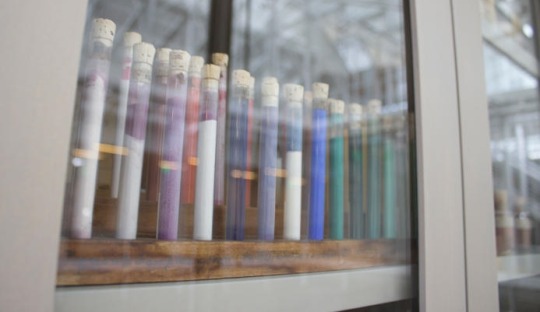
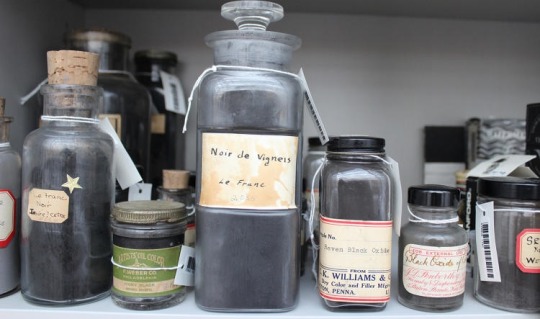
Harvard has a pigment library that
stores old pigment sources, like the
ground shells of now-extinct insects,
poisonous metals, and wrappings from
Egyptian mummies, to preserve the
origins of the world’s rarest colors.
A few centuries ago, finding a specific color might have meant trekking across the globe to a mineral deposit in the middle of Afghanistan. “Every pigment has its own story,” Narayan Khandekar, the caretaker of the pigment collection, told Fastcodesign. He also shared the stories of some of the most interesting pigments in the collection.
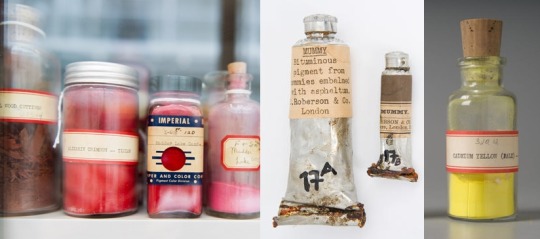
Mummy Brown
“People would harvest mummies from Egypt and then extract the brown resin material that was on the wrappings around the bodies and turn that into a pigment. It’s a very bizarre kind of pigment, I’ve got to say, but it was very popular in the 18th and 19th centuries.”
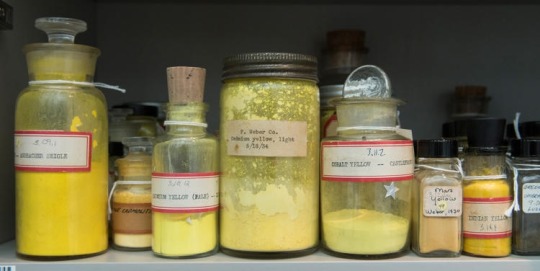
Cadmium Yellow
“Cadmium yellow was introduced in the mid 19th century. It’s a bright yellow that many impressionists used. Cadmium is a heavy metal, very toxic. In the early 20th century, cadmium red was introduced. You find these pigments used in industrial processes. Up until the 1970s, Lego bricks had cadmium pigment in them.”
Annatto “The lipstick plant—a small tree, Bixa orellana, native to Central and South America—produces annatto, a natural orange dye. Seeds from the plant are contained in a pod surrounded with a bright red pulp. Currently, annatto is used to color butter, cheese, and cosmetics.”
Lapis Lazuli “People would mine it in Afghanistan, ship it across Europe, and it was more expensive than gold so it would have its own budget line on a commission.”
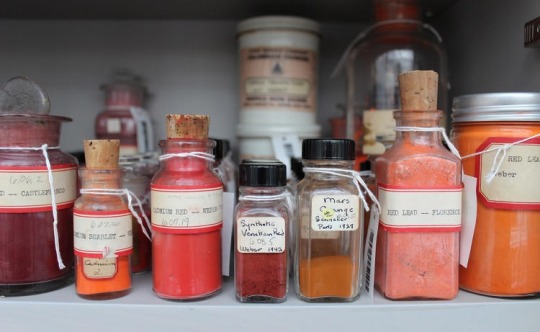
Dragon’s Blood “It has a great name, but it’s not from dragons. [The bright red pigment] is from the rattan palm.”
Cochineal “This red dye comes from squashed beetles, and it’s used in cosmetics and food.”
Emerald Green “This is made from copper acetoarsenite. We had a Van Gogh with a bright green background that was identified as emerald green. Pigments used for artists’ purposes can find their way into use in other areas as well. Emerald green was used as an insecticide, and you often see it on older wood that would be put into the ground, like railroad ties.”
finally after all this years, i’ve drew the four of them. i know pink is different now but when i drew her the episode jungle moon just aired………………………………… DONATIONS: ko-fi.com/inkershike